
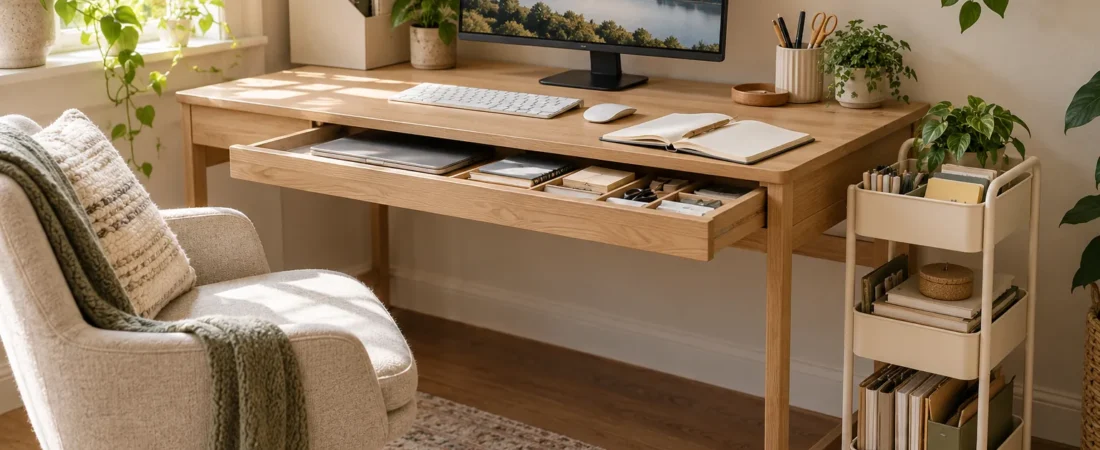
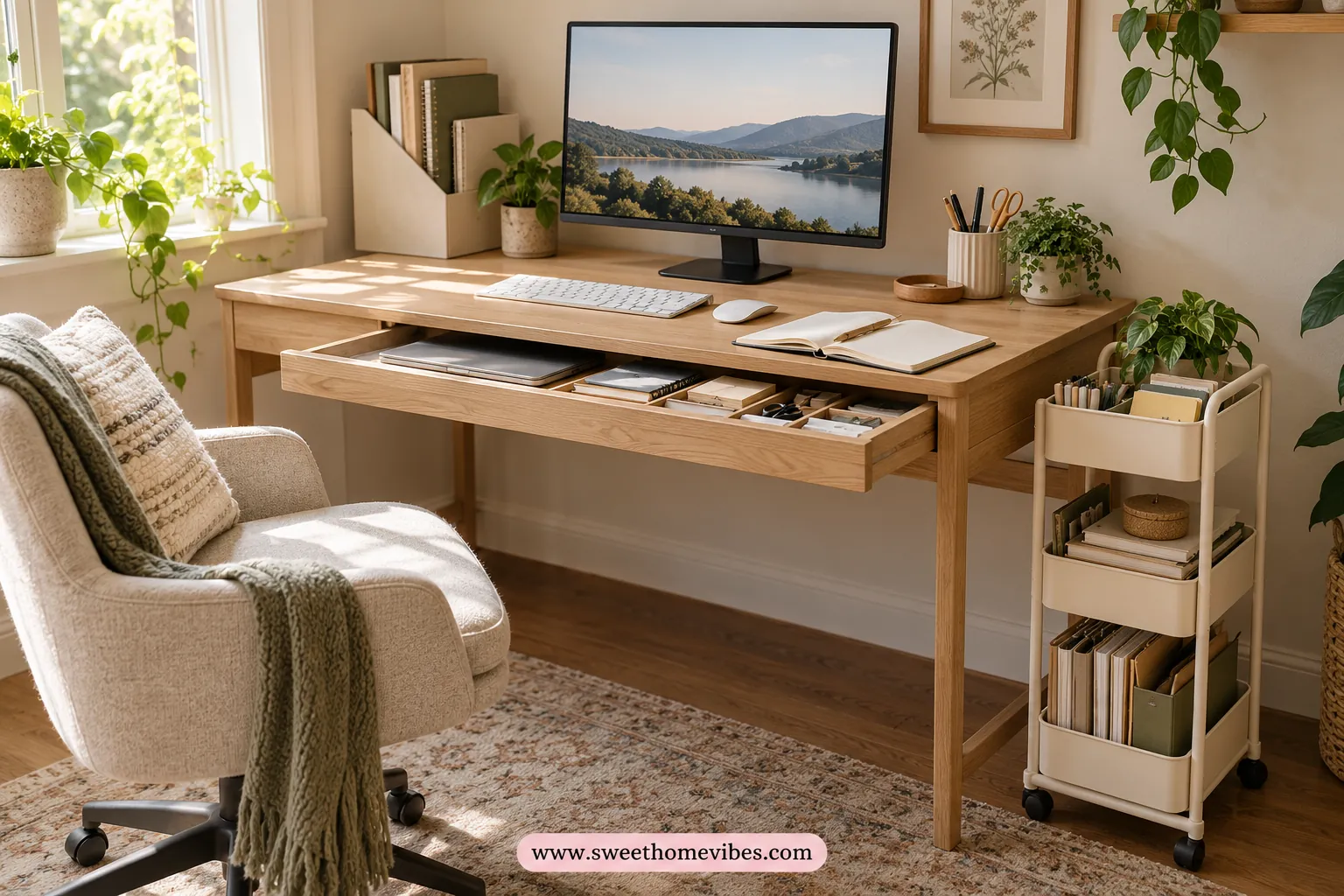
A small desk can become crowded when notebooks, paperwork, stationery, and everyday accessories compete for the same surface. Even a few extra items can leave little room for your keyboard, mouse, or writing. However, a larger desk isn't always necessary when the real problem is where everything is stored.
These 11 small desk organization ideas will help you make better use of overlooked storage areas. You'll find solutions for desks without drawers, narrow workspaces, and shared study areas. Each idea explains what to store, where to place it, and what to check before buying anything.
Where Should You Start When Organizing a Small Desk?
Start by removing everything from your desk except the equipment you use daily. Next, separate your remaining belongings according to how frequently you need them. This makes it easier to decide which supplies deserve space nearby and which can move elsewhere.
Think of your workspace as three storage zones:
- Daily essentials: Keyboard, mouse, current notebook, and frequently used stationery.
- Occasional supplies: Spare notebooks, folders, chargers, and extra accessories.
- Outside storage: Archived paperwork, unused equipment, and backup supplies.
Once you've sorted your belongings, identify which category occupies the most space. Paper piles may need upright storage, while loose stationery might fit inside a shallow drawer. The aim is to choose storage that frees more usable desk space than it occupies.
| What's causing clutter? | Better storage location |
|---|---|
| Pens and sticky notes | Shallow drawer or compact organizer |
| Papers and folders | Vertical file holder |
| Occasional supplies | Under-desk or nearby storage |
| Frequently used books | Narrow shelf or upright holder |
| Rarely used accessories | Storage away from the desk |
Measure your available space before choosing organizers, especially when working with a narrow desktop. Check the desk depth, underside clearance, and surrounding furniture so new storage doesn't interfere with movement. Our Desk and Workspace Size Planner can help you assess these dimensions.
11 Small Desk Organization Ideas That Save Space
The following small desk organization ideas focus on using available space rather than covering your desktop with additional containers. Some solutions use the underside or edges of your desk, while others make better use of nearby walls and floor space. Choose according to your storage needs and available room.
1. Add a Shallow Drawer Beneath a Desk Without Drawers
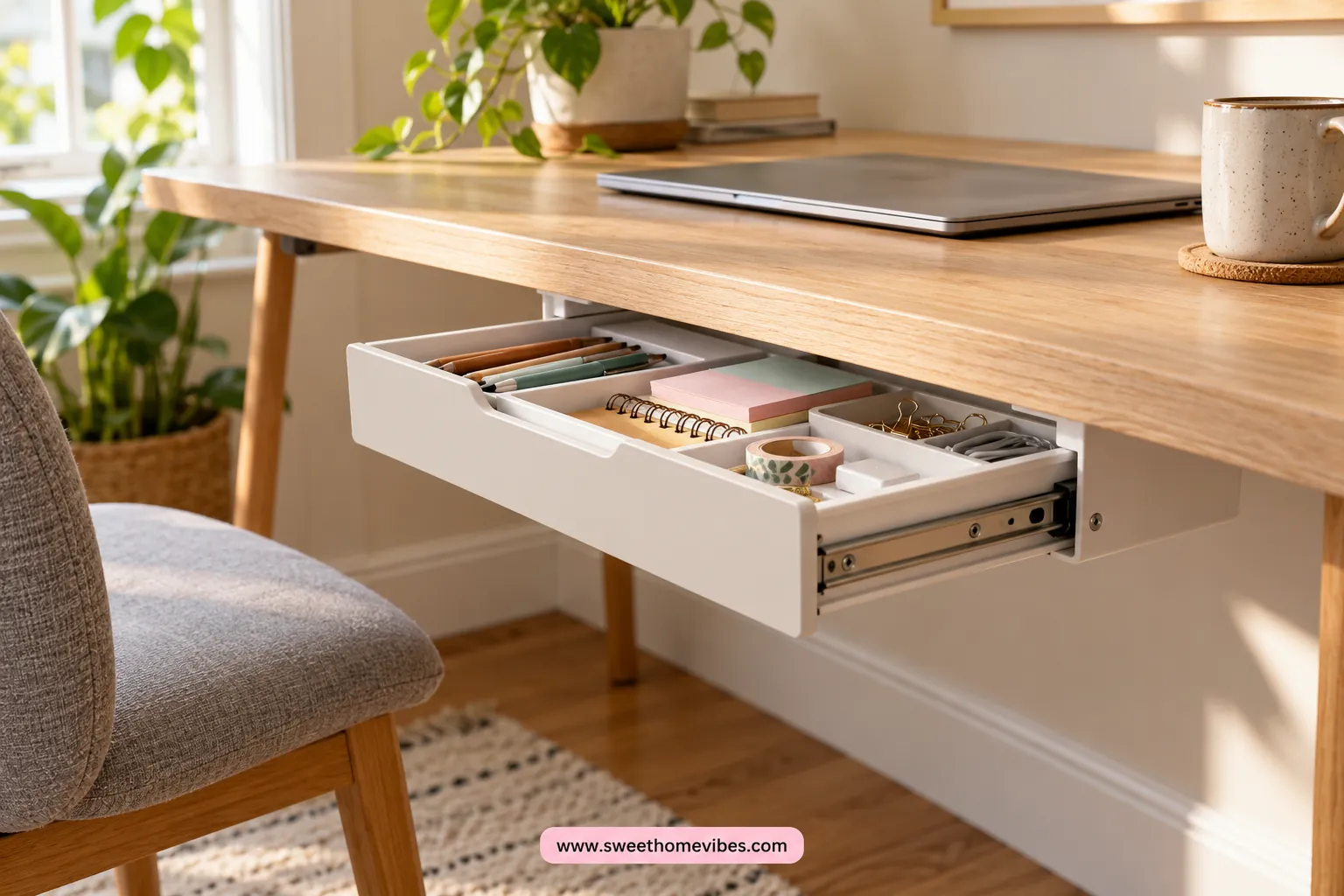
A desk without drawers often leaves pens, sticky notes, and small accessories scattered across the surface. A slim under-desk drawer gives these items a designated place without taking up valuable working space. It's especially useful when you have enough clearance beneath your desk but limited room on top.
Adhesive drawers can suit desks where drilling isn't desirable, although their holding capacity depends on the surface and product rating. Screw-mounted options may support heavier contents when the desktop material allows secure installation. Measure the available legroom and check the drawer's opening clearance before choosing either design.
Amazon Product Recommendation
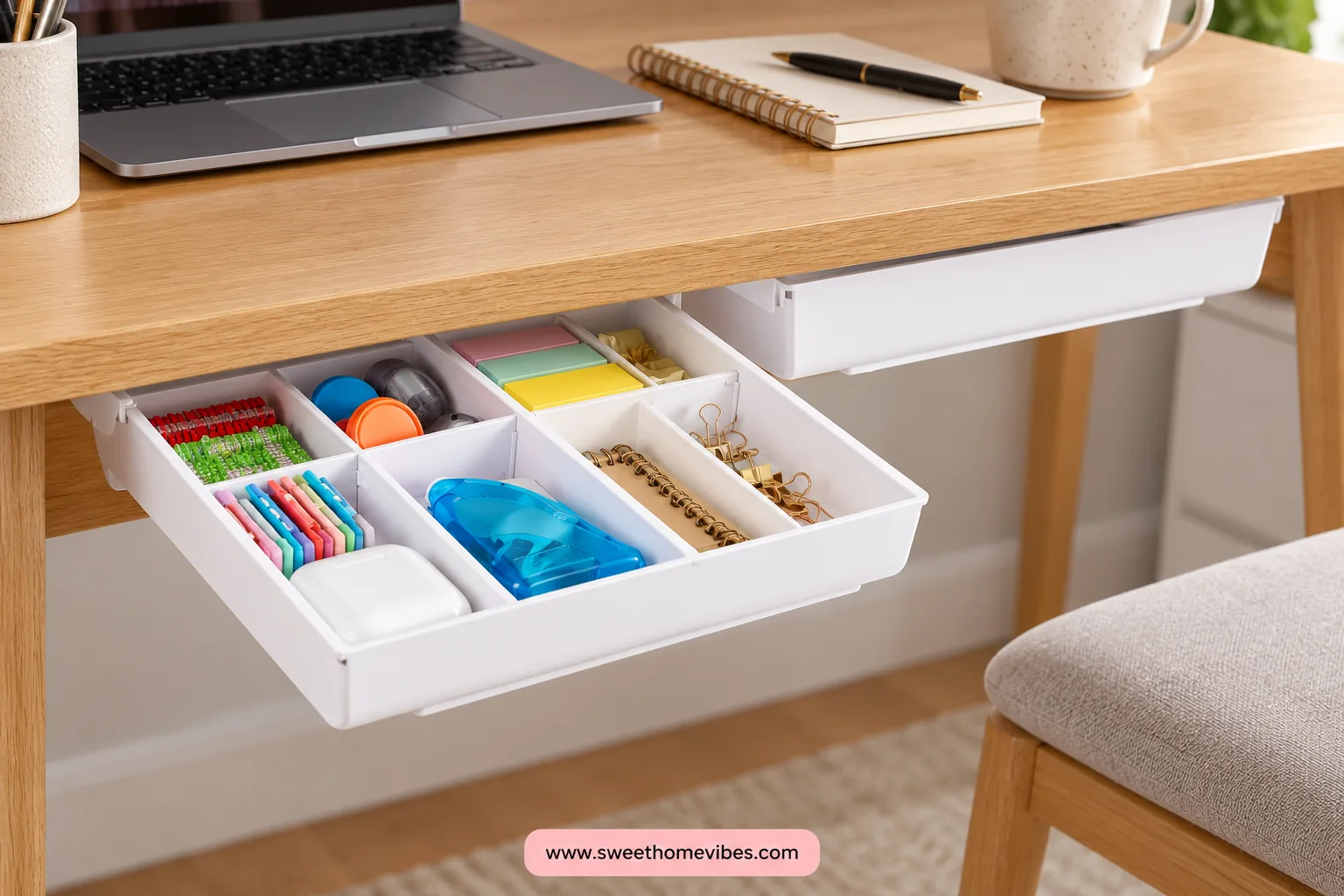
Self-Adhesive Under-Desk Drawers
300+ bought in past monthSee the details
Product specs
- Two white plastic slide-out drawers.
- Four removable dividers for separating small supplies.
- Self-adhesive mounting for a suitable flat desk underside.
Best for
Pens, sticky notes, and small accessories beneath a desk without drawers.
Buy now on Amazon2. Keep Paperwork Upright Instead of Stacking It Flat
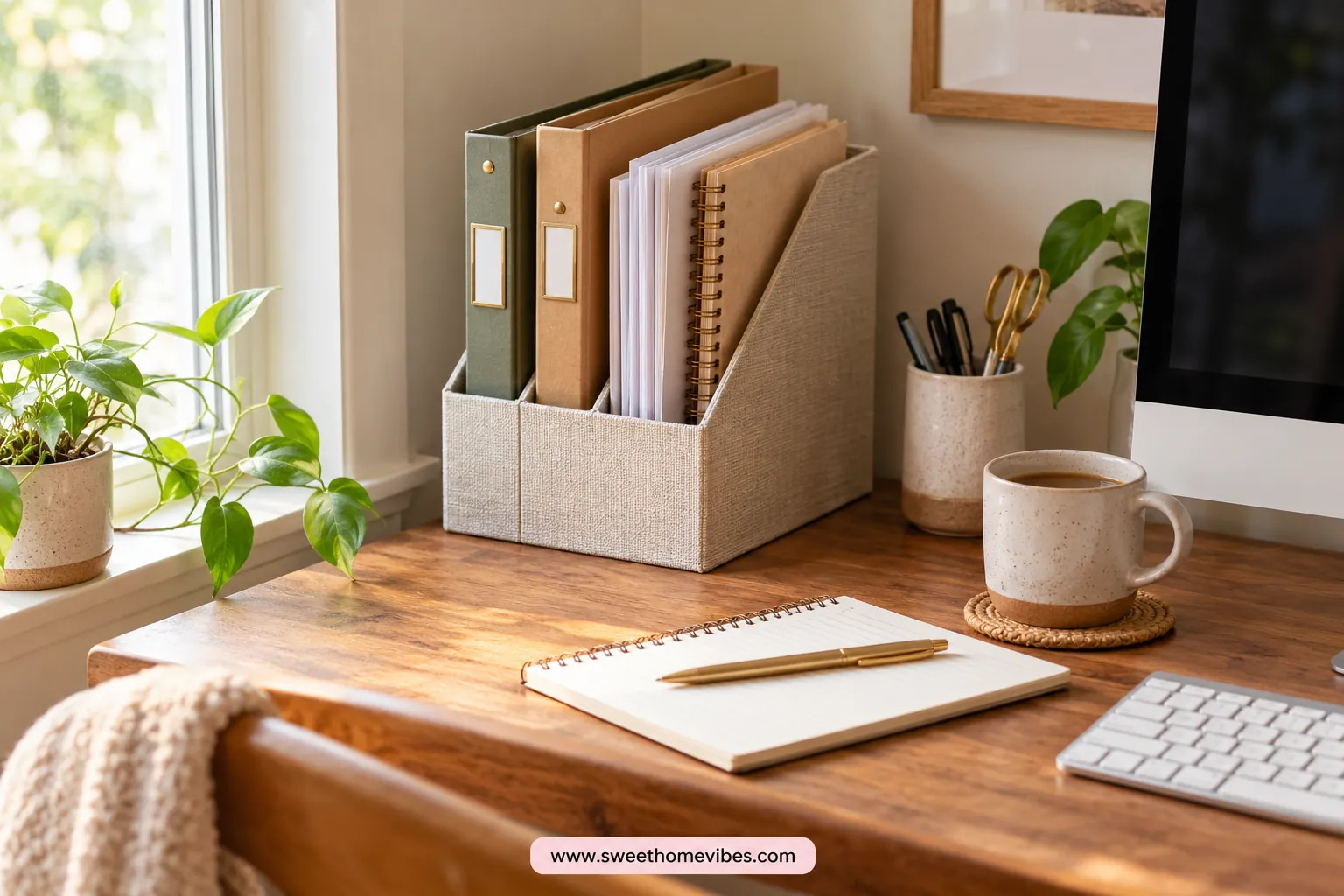
Paper stacks can quickly cover a small desk, especially when several projects require different documents. A narrow vertical file organizer keeps folders and paperwork upright, making individual documents easier to retrieve. It also uses less horizontal space than spreading papers across the working surface.
Separate documents into three categories: action needed, currently using, and ready to archive. Choose a holder that accommodates your usual paper size without bending documents or becoming unstable. Keep active paperwork near the back corner of your desk, then move completed files into longer-term storage.
Amazon Product Recommendation
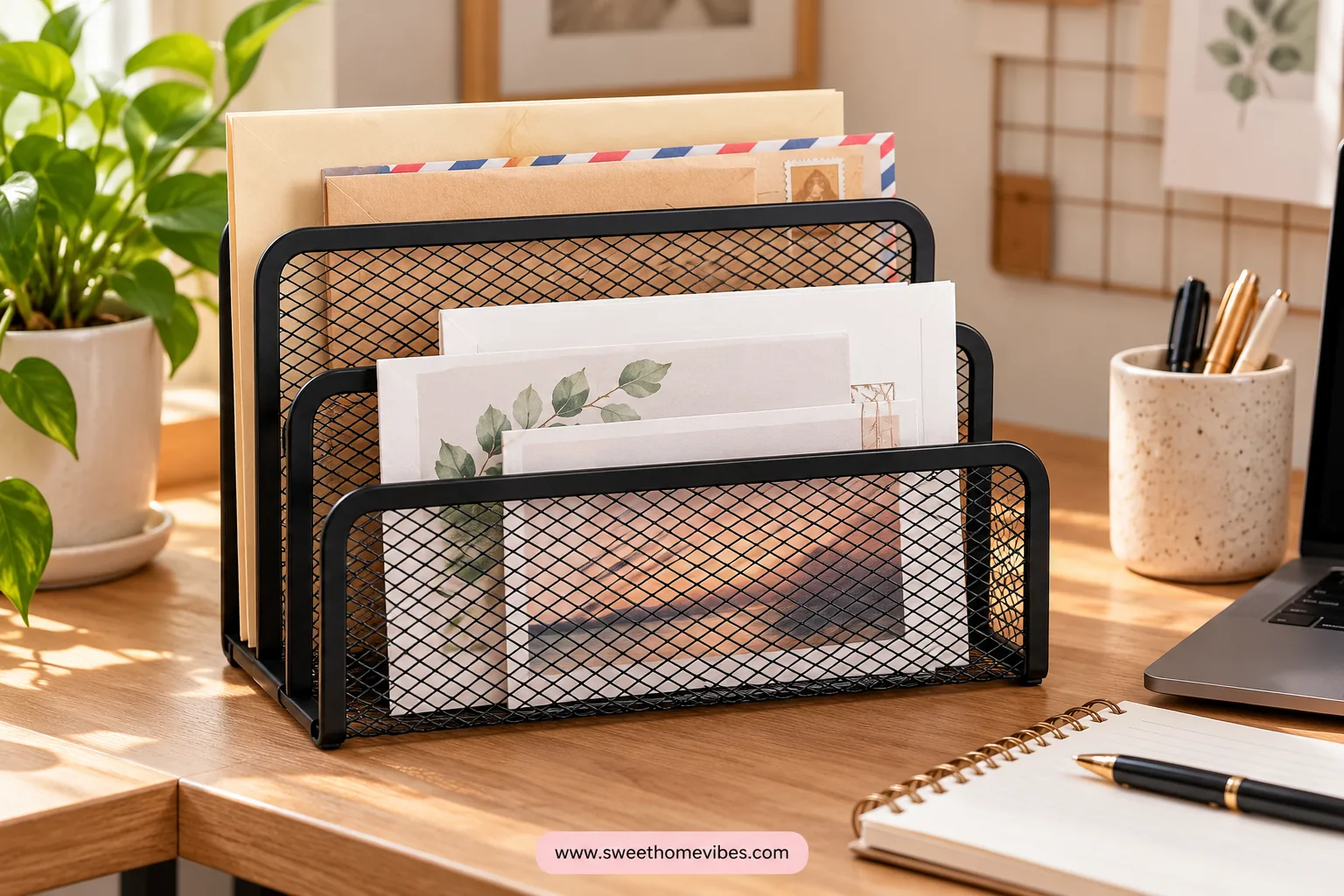
Three-Slot Mesh Mail Organizer
1K+ bought in past monthSee the details
Product specs
- Black metal mesh holder with three upright compartments.
- Approximately 6.79 inches wide, 2.95 inches deep, and 5.43 inches high.
- Freestanding design; no assembly needed.
Best for
Envelopes, incoming mail, and small documents at a desk corner.
Check paper size: this compact mail sorter is smaller than a full-height folder holder.
Buy now on Amazon3. Use the Side Edge of Your Desk for Hanging Storage
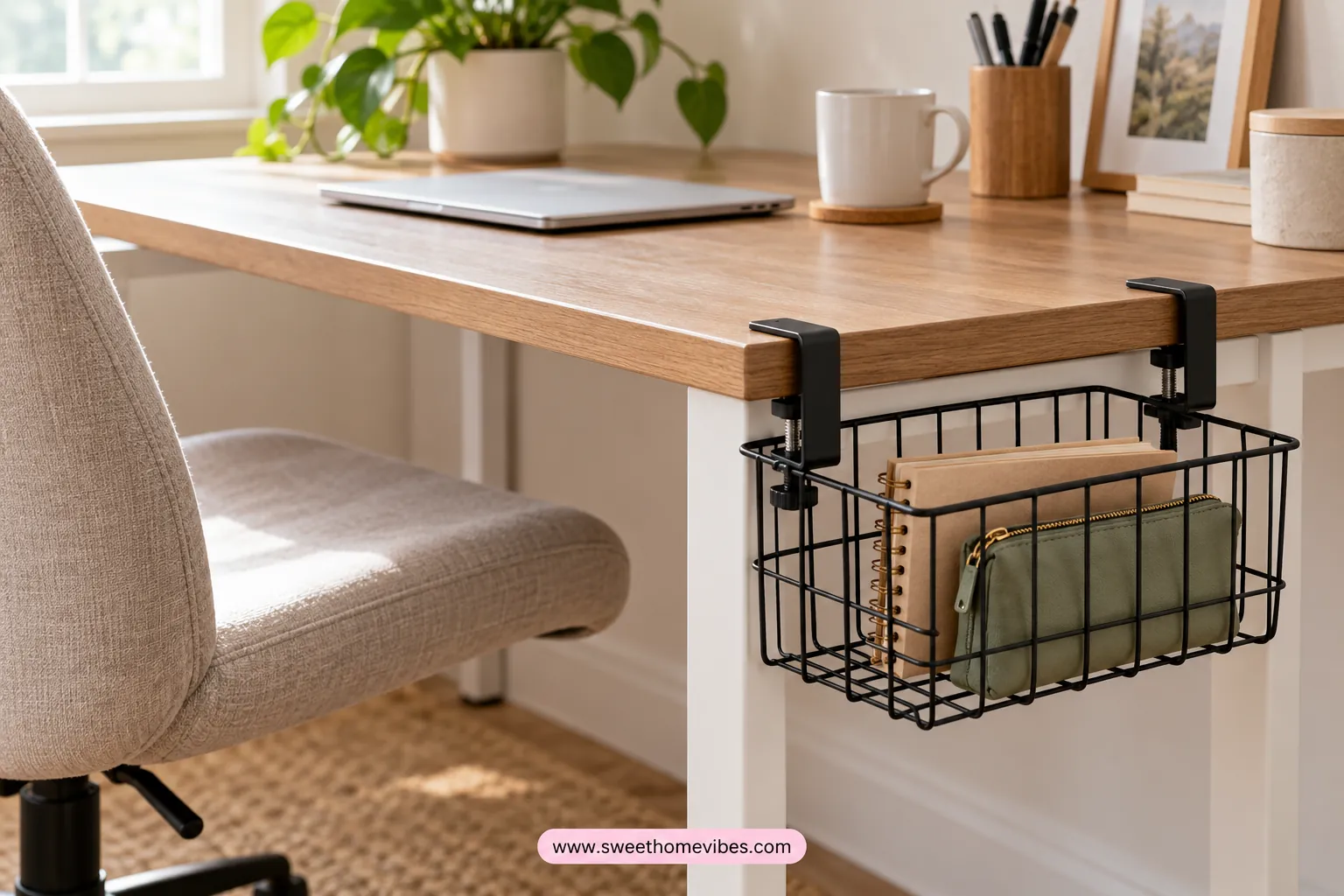
A narrow desk may have little room for another organizer, even when you need additional storage. Clamp-on baskets and hanging holders use the desk's side edge instead of occupying the main surface. They can keep lightweight notebooks, stationery pouches, or small accessories accessible throughout the day.
Check your desk's edge thickness before purchasing a clamp-on basket, since some designs won't attach securely to thick or beveled surfaces. Position the holder where it won't obstruct drawers, chair movement, or your knees. Also follow the manufacturer's weight limits to prevent damage or accidental detachment.
Amazon Product Recommendation
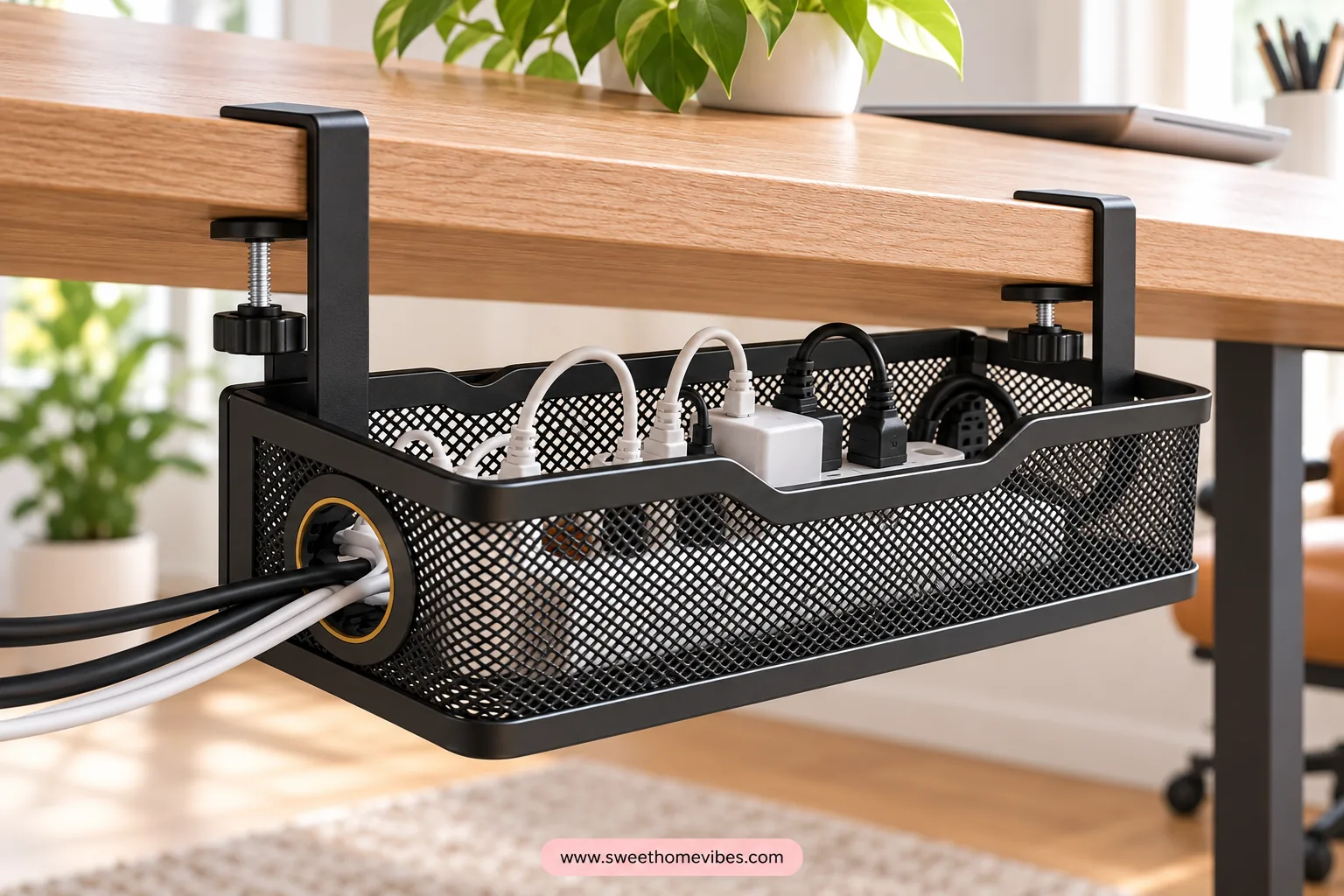
Clamp-On Metal Cable Tray
500+ bought in past monthSee the details
Product specs
- Black metal mesh tray, approximately 13.4 × 4.6 × 3.1 inches.
- Clamps fit desk edges 0.4–2.4 inches thick.
- Includes four cable clips and six cable ties; listed capacity up to 10 pounds.
Best for
Routing cables and supporting a suitable power strip beneath the desk.
This is a cable tray, rather than a side basket for notebooks or stationery pouches.
Buy now on Amazon4. Turn Unused Wall Space Into Supply Storage
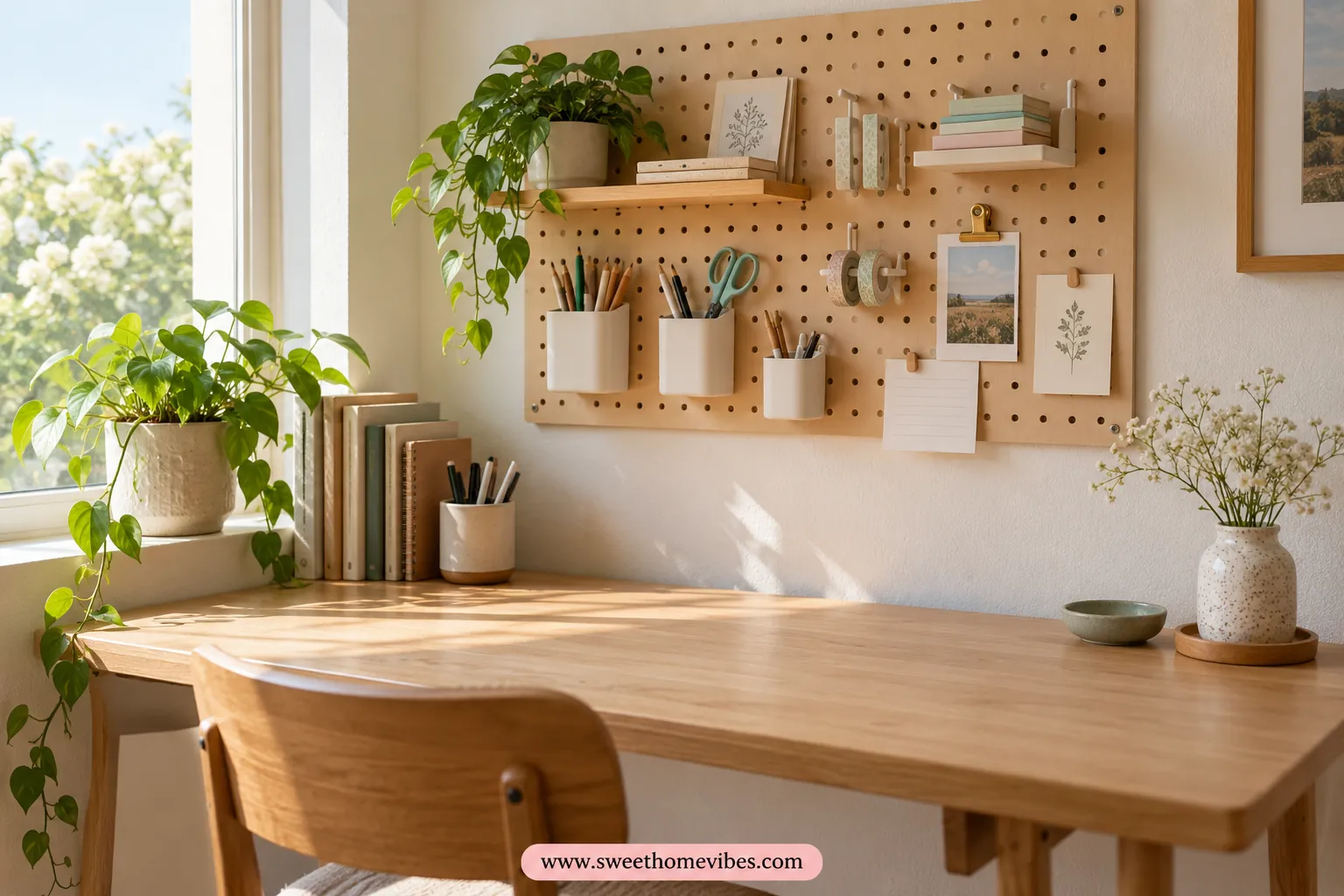
The wall above your desk can provide additional storage when the desktop has little room left. Compact pegboards, wall pockets, and shallow organizers keep small supplies visible without occupying the working surface. They're especially useful for stationery, notes, and lightweight accessories that need designated places.
Choose an organizer according to what you'll store rather than filling the wall with unnecessary attachments. Renters can consider removable mounting options, although adhesives may damage certain paint finishes or wallpapers. Check installation requirements, weight limits, and reachability before attaching anything above your equipment.
Amazon Product Recommendation
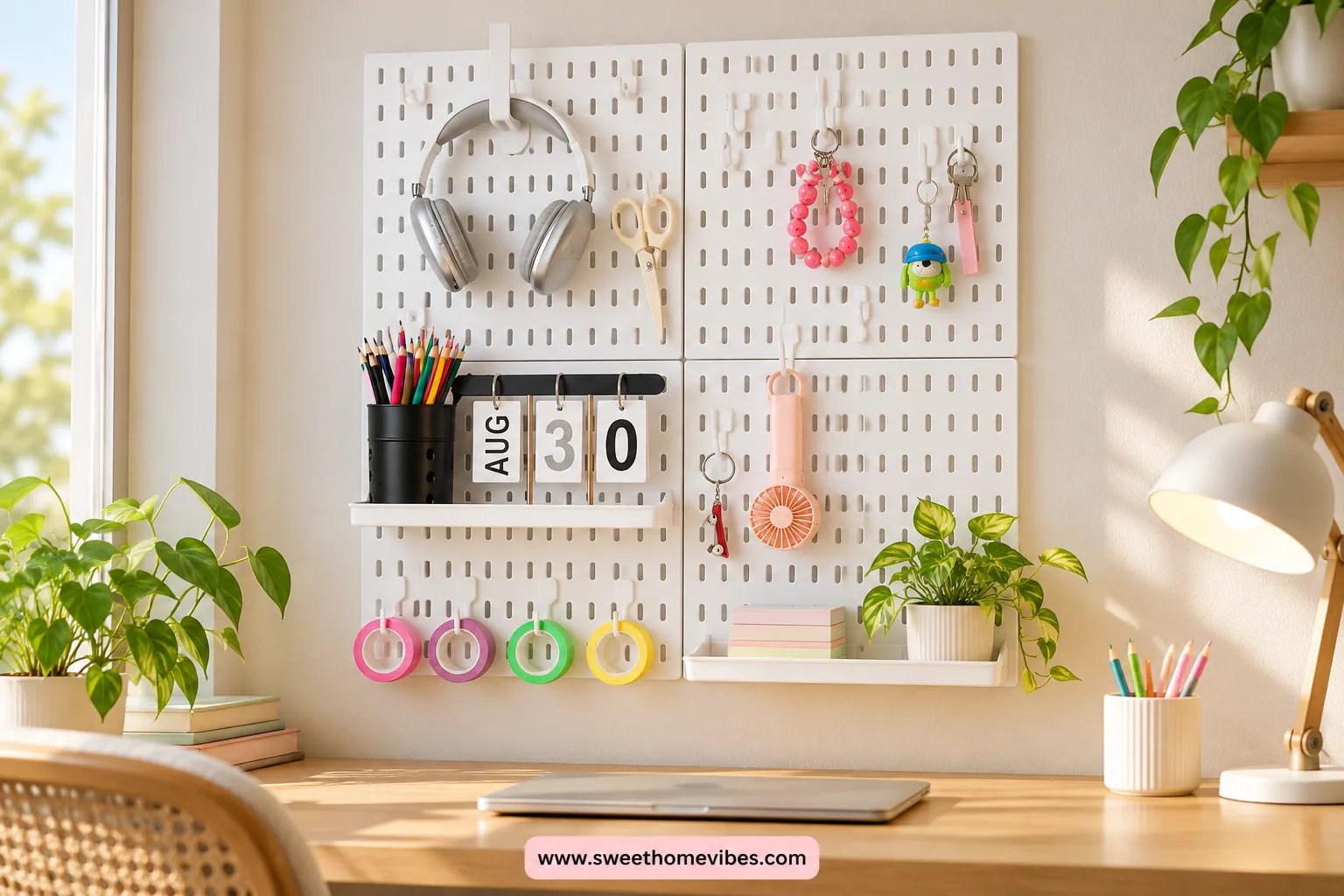
Four-Panel White Pegboard Organizer
See the details
Product specs
- Four 12 × 12-inch white ABS panels.
- Arrange as a 24 × 24-inch square or a 12 × 48-inch strip.
- Includes ten small hooks, two large hooks, and two shelves.
Best for
Keeping lightweight stationery and small supplies on the wall above a desk.
Check the supplied mounting instructions and your wall surface before installation.
Buy now on Amazon5. Give Notebooks and Planners a Dedicated Vertical Slot
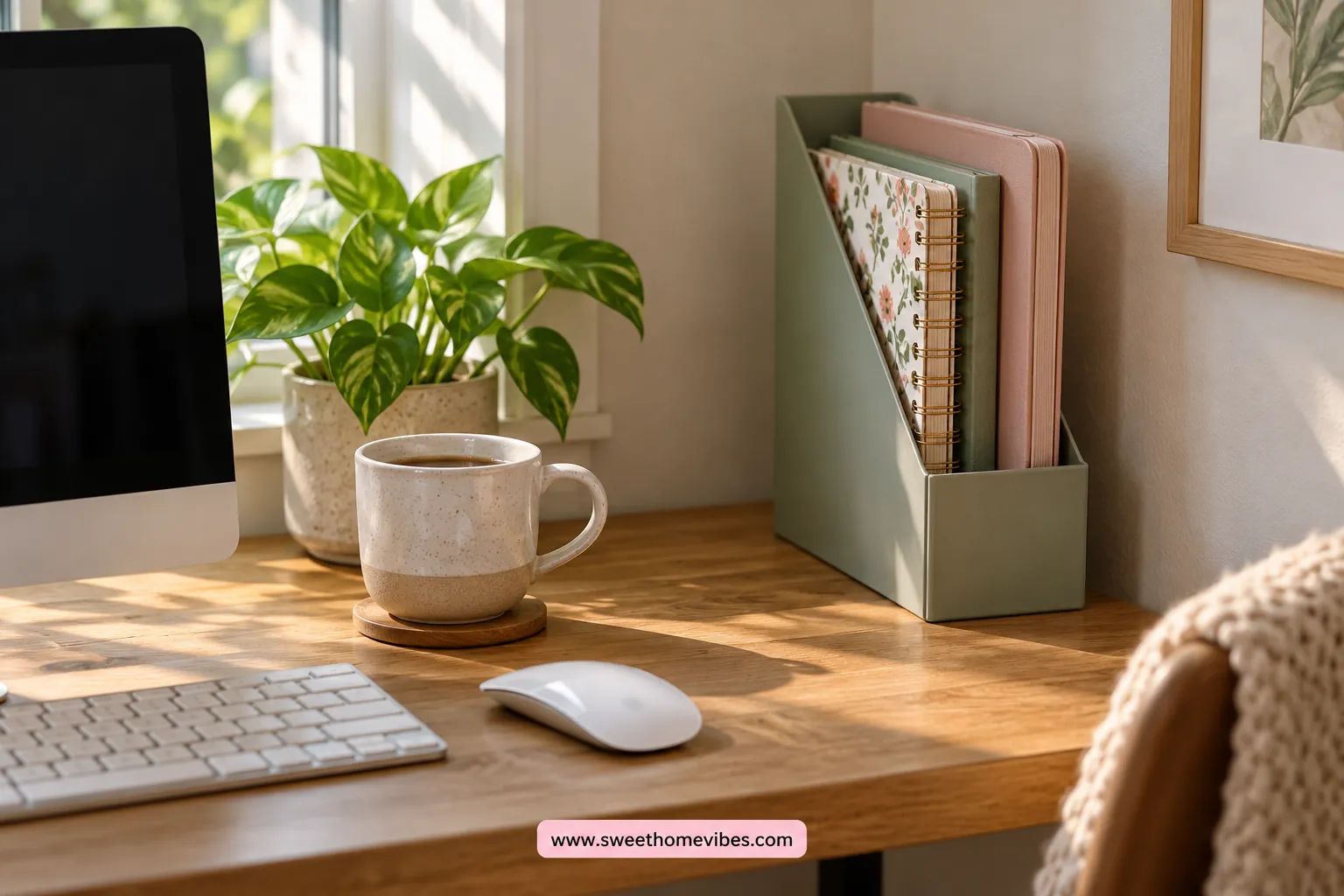
Notebooks and planners often end up underneath keyboards or stacked beside the mouse. A narrow magazine holder or upright bookend keeps them together while occupying less desktop space. This arrangement also makes it easier to retrieve one notebook without disturbing everything else.
Choose a holder that supports your notebooks without squeezing them tightly or bending thinner covers. Keep only current planners and frequently used notebooks nearby, then move completed ones into separate storage. If your existing file organizer has enough room, use an available compartment instead of buying another holder.
6. Store Small Accessories in Stackable Compartments
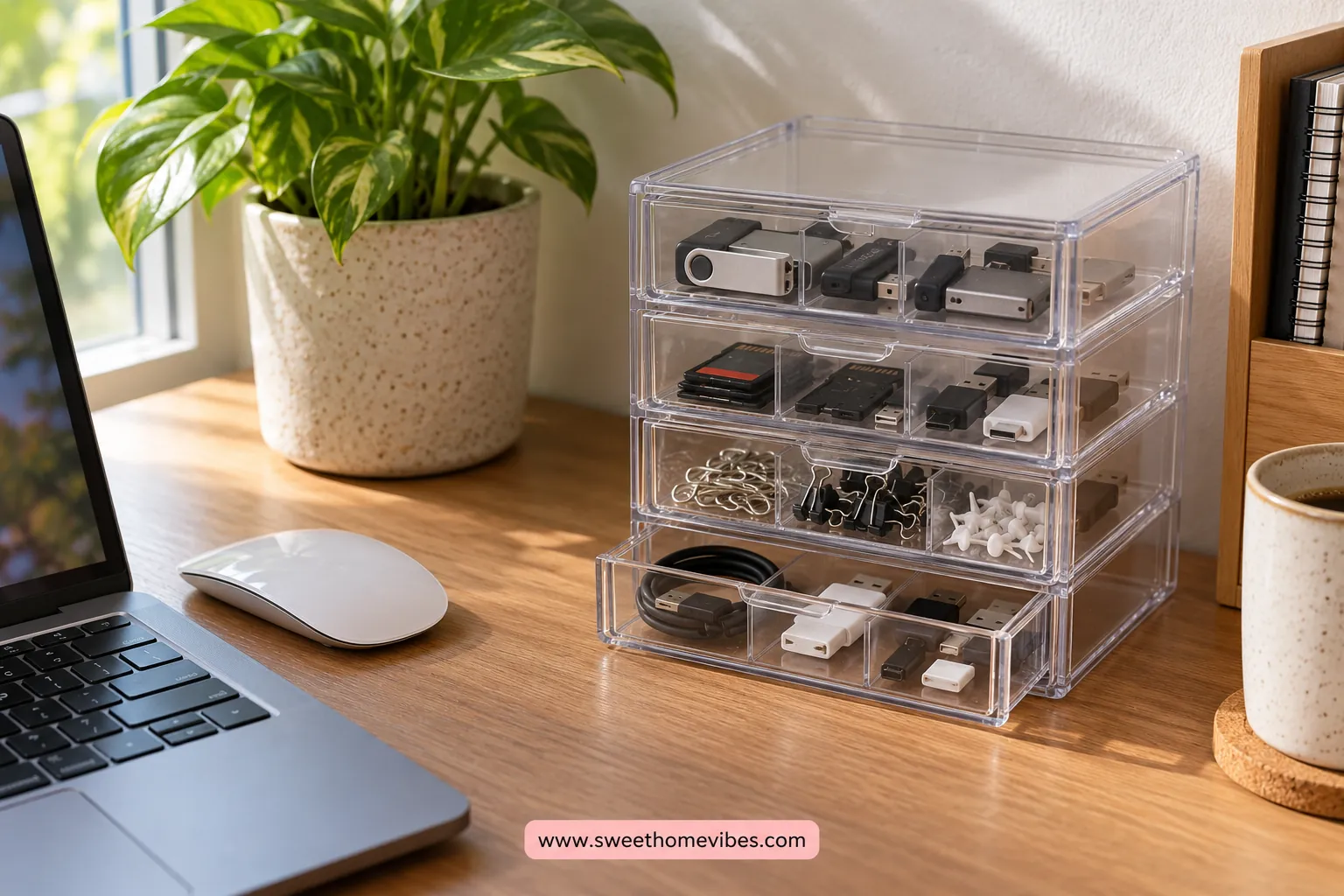
USB drives, memory cards, paper clips, and small adapters can disappear inside larger storage containers. Shallow stackable compartments separate these items while using more vertical space than individual boxes spread across the desk. This makes them useful when you have several categories of tiny accessories.
Choose compartments that suit the quantity and size of your supplies rather than purchasing an oversized organizer. Transparent containers make contents easier to identify, while labeled opaque boxes can provide a more uniform appearance. Keep stacks low enough that retrieving items from the bottom remains convenient.
Amazon Product Recommendation
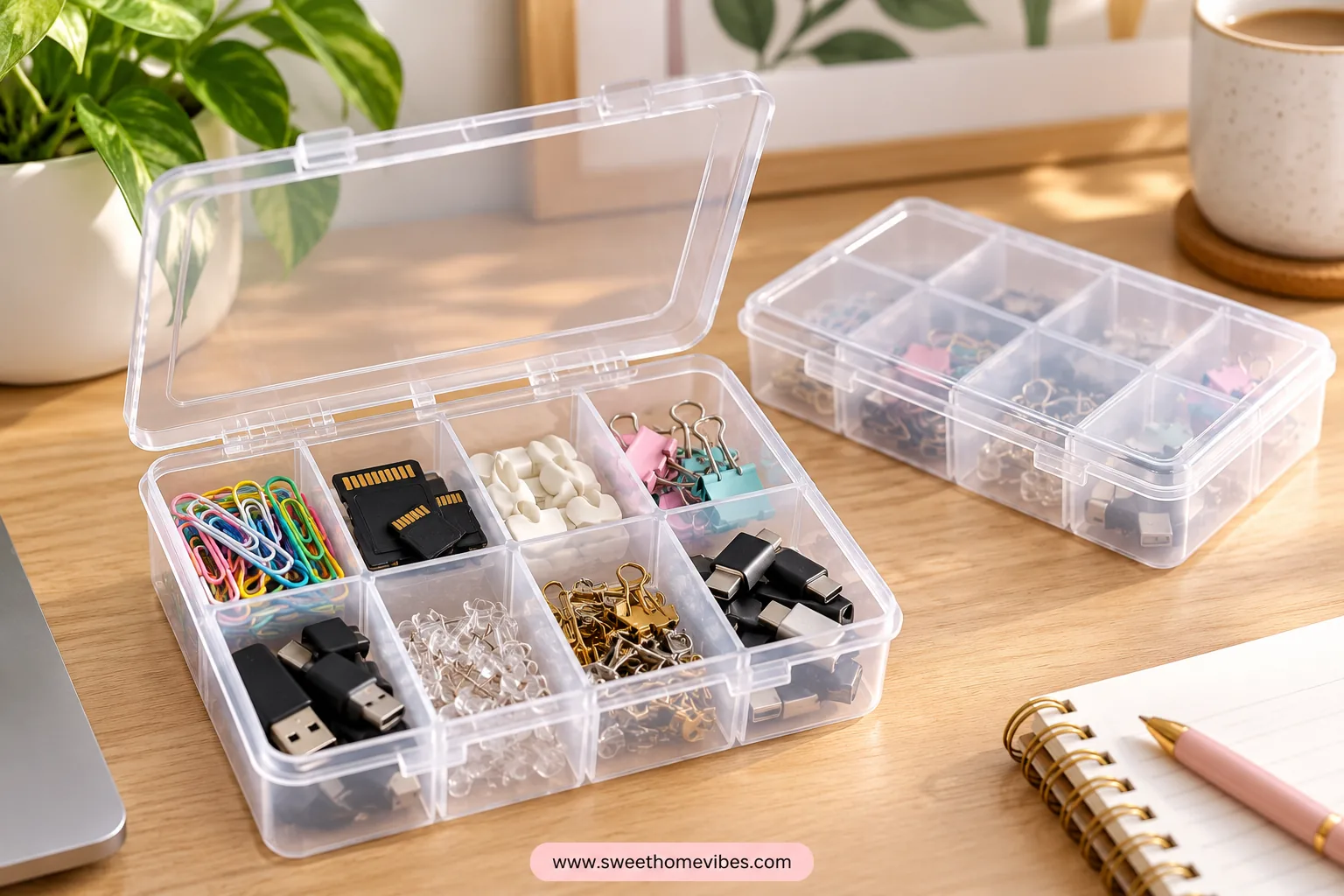
Clear Divided Storage Boxes
500+ bought in past monthSee the details
Product specs
- Two clear plastic lidded boxes with removable dividers.
- Each box measures approximately 7.3 × 4.8 × 1.6 inches.
- Adjust compartments from two to eight; includes label stickers.
Best for
Separating paper clips, memory cards, and small adapters.
Buy now on Amazon7. Add a Narrow Shelf Above the Desk for Occasional-Use Items
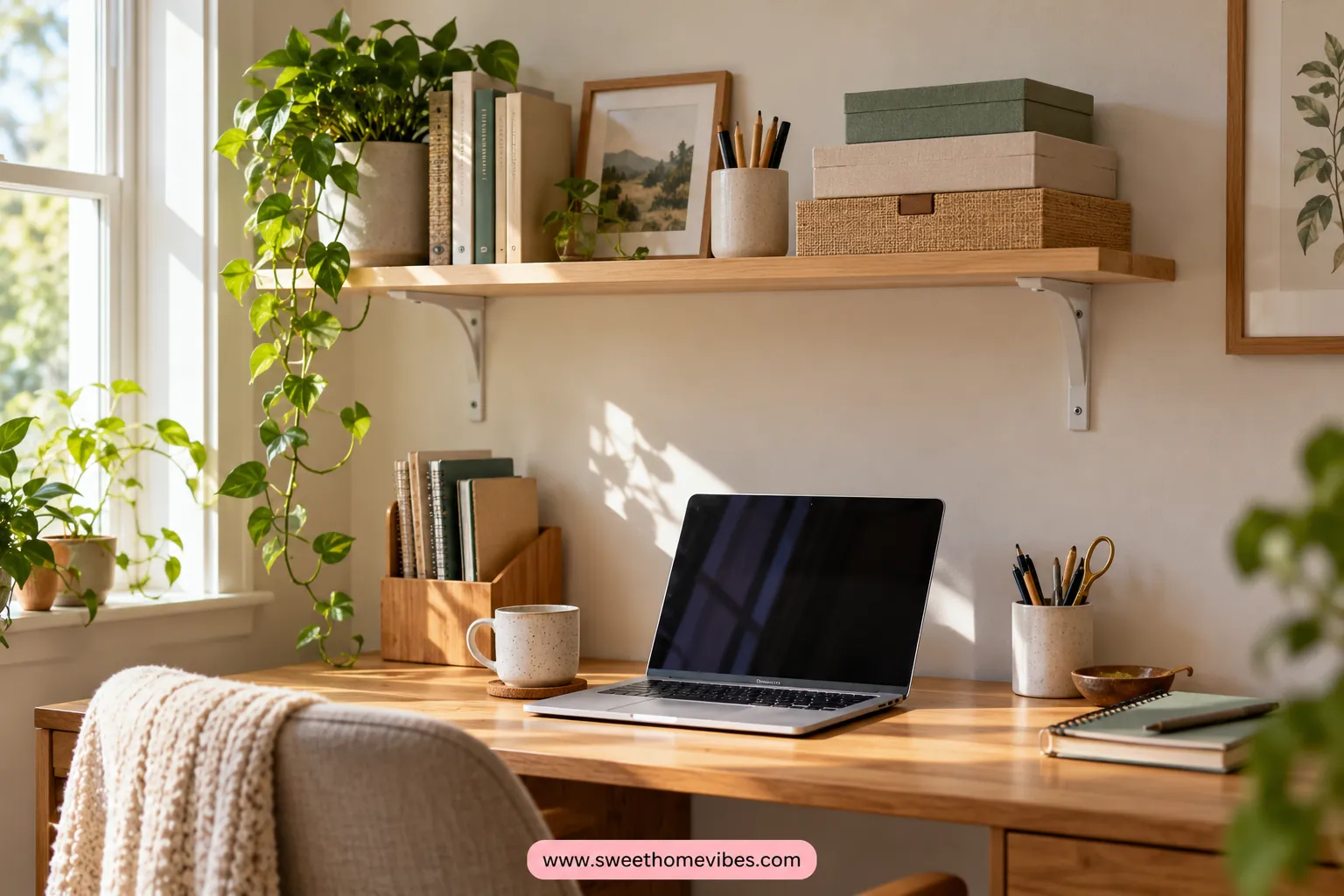
Books, spare stationery, and extra supplies can occupy space needed for everyday work. A shallow shelf above your desk moves these belongings away from the main working surface. It can also keep occasional-use items nearby without requiring another floor-standing storage unit.
Check the shelf's depth, load capacity, and installation requirements before deciding where it belongs. Wall-mounted shelves need suitable fixings, while freestanding over-desk shelves require enough desktop space for their supports. Keep heavier objects securely supported and avoid storing frequently used supplies in awkward overhead positions.
Optional Amazon Product Recommendation
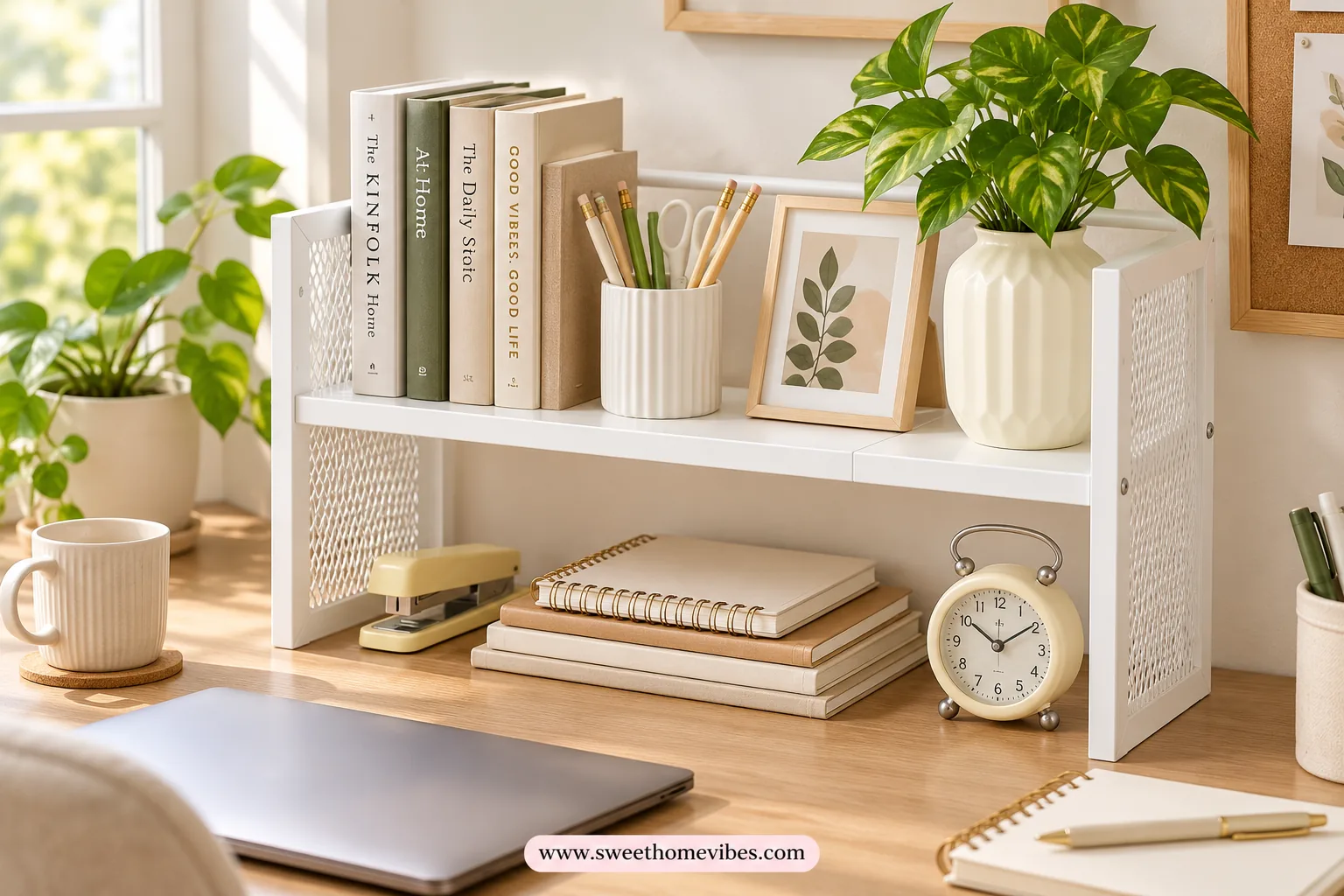
Expandable Metal Desktop Shelf
100+ bought in past monthSee the details
Product specs
- White freestanding metal shelf with mesh side panels.
- Expands from 17 to 30.4 inches wide.
- Two shelf-height settings: approximately 7.52 and 11.02 inches.
Best for
Raising a few books and occasional supplies above the desktop.
This tabletop shelf needs space for its supports; it is not a wall-mounted shelf.
Buy now on Amazon8. Keep a Slim Rolling Cart Beside the Desk
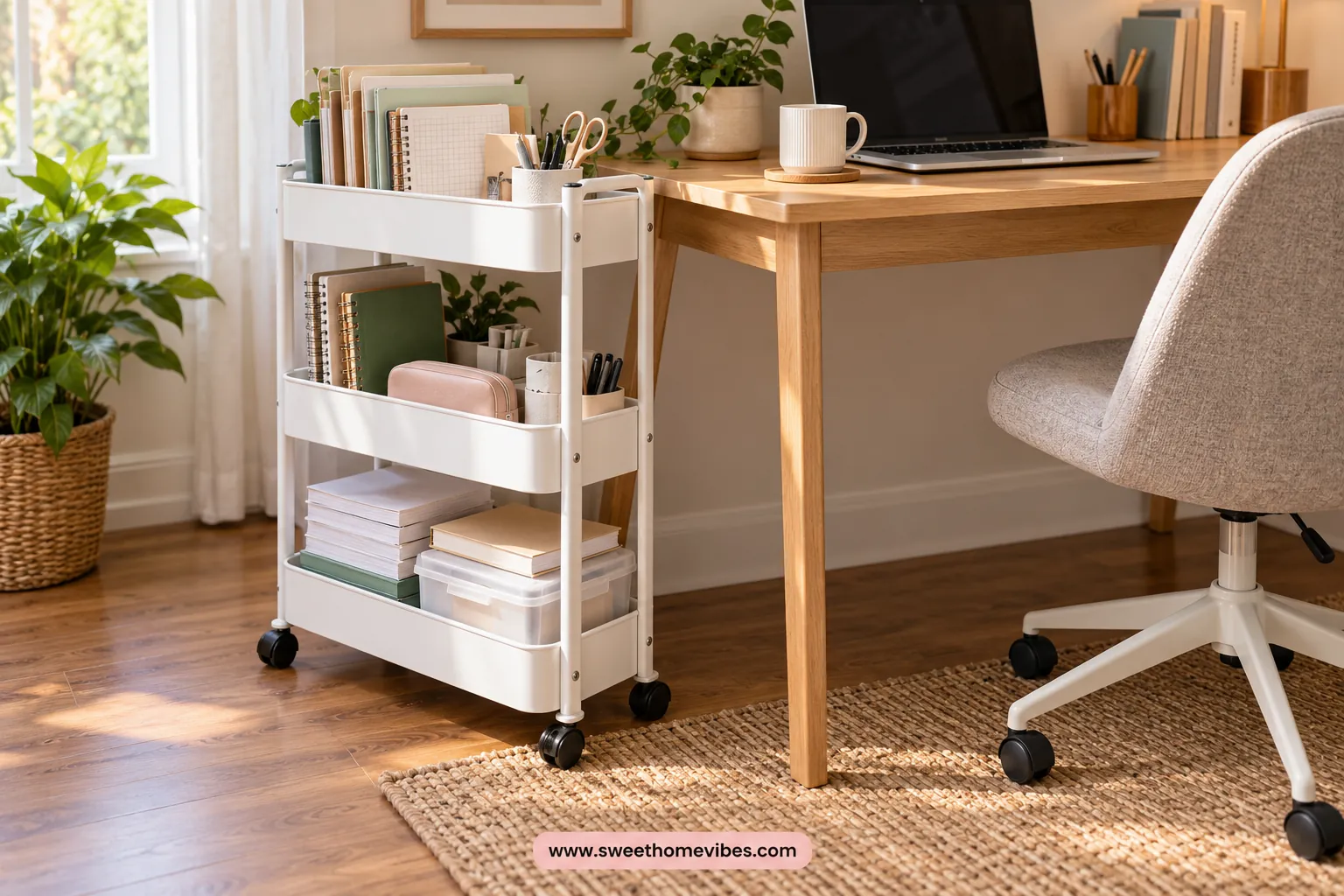
Some supplies are too bulky for shallow drawers or small desktop organizers. A slim rolling cart can hold project folders, craft materials, and larger stationery collections beside your desk. It provides nearby storage without taking space away from your keyboard or writing area.
Measure the available floor space, including clearance for wheels, handles, and chair movement. Keep heavier supplies on lower tiers and place frequently used items near the top for easier access. If your room lacks side clearance, our corner desk setup ideas for small spaces may help you consider alternative arrangements.
Amazon Product Recommendation
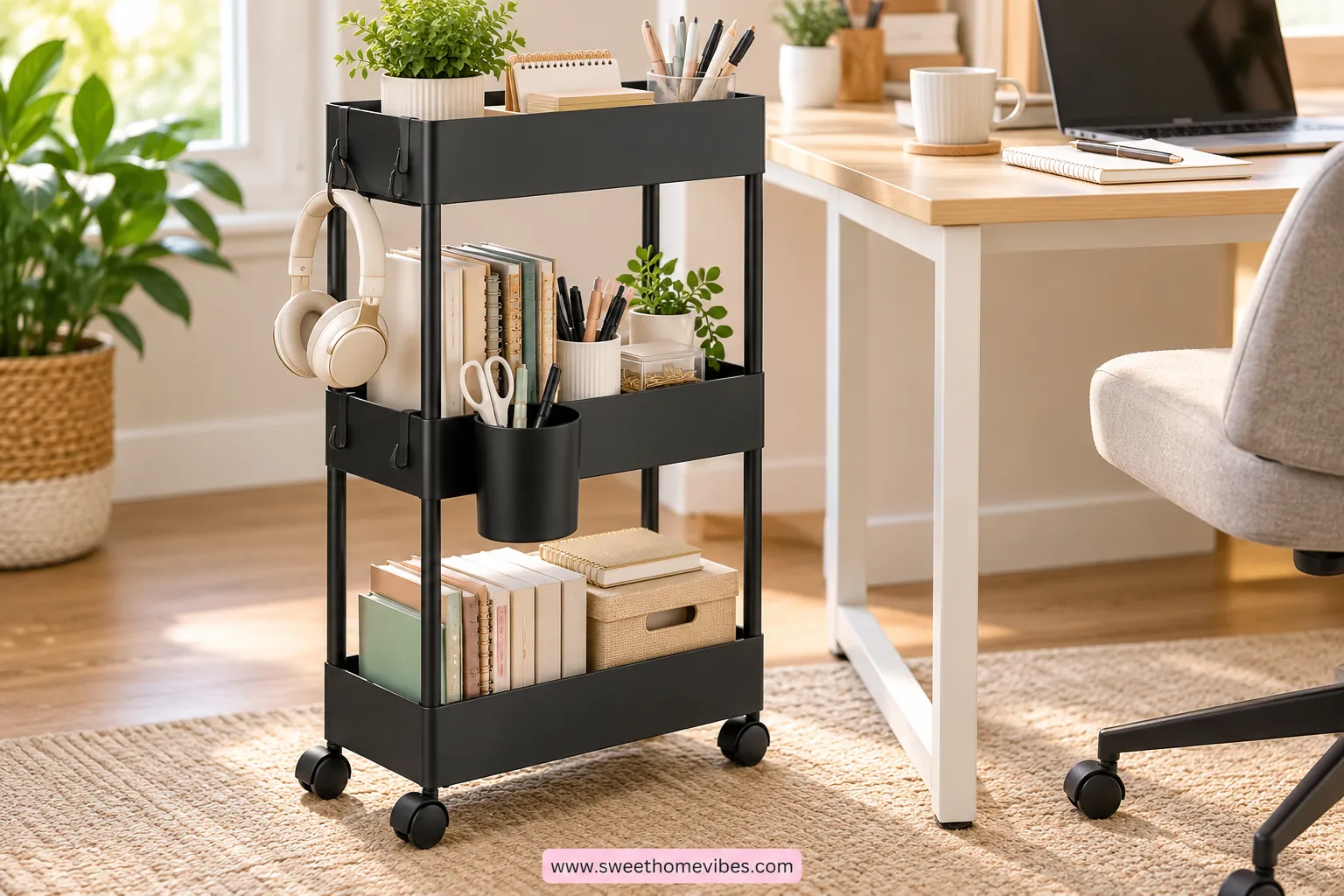
Slim Three-Tier Rolling Cart
1K+ bought in past monthSee the details
Product specs
- Black three-tier ABS storage cart, 7.1 inches wide.
- Removable caster wheels and ventilated trays.
- Includes one side cup and six hooks.
Best for
Keeping small project supplies beside the desk when floor clearance allows.
Buy now on Amazon9. Use a Desk Caddy That Holds Only Daily Essentials
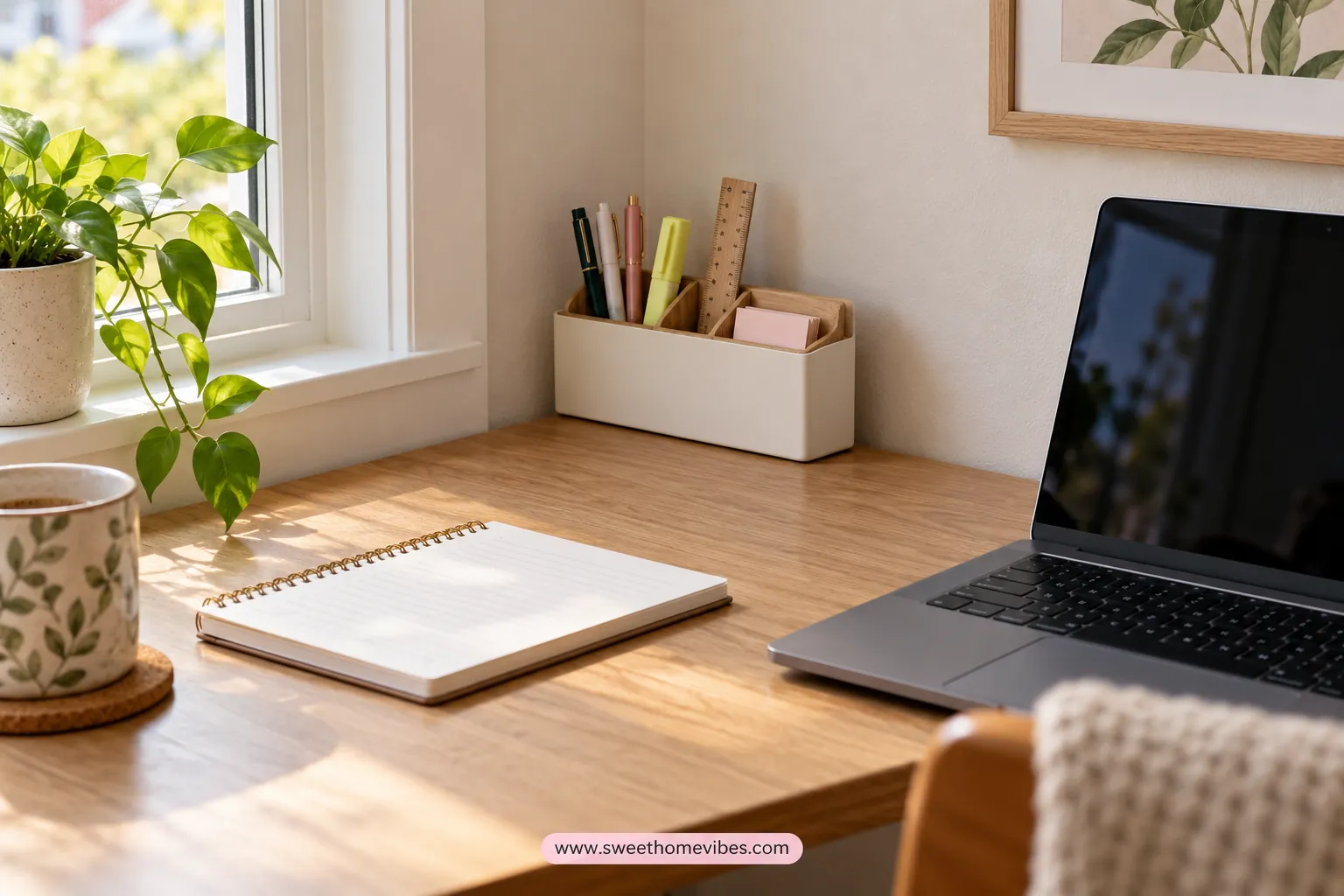
Several pen cups, trays, and small containers can occupy more room than the supplies inside them. One compact desk caddy can hold your daily essentials without spreading them across the working surface. Start with the pens, highlighters, sticky notes, and small tools you actually use.
Choose a narrow caddy with compartments if your supplies need separating, or an open design for differently shaped items. Place it near a back corner so it doesn't interfere with your keyboard or writing area. Store duplicate stationery elsewhere instead of filling the caddy with unnecessary extras.
10. Store a Laptop Vertically When You're Not Using It
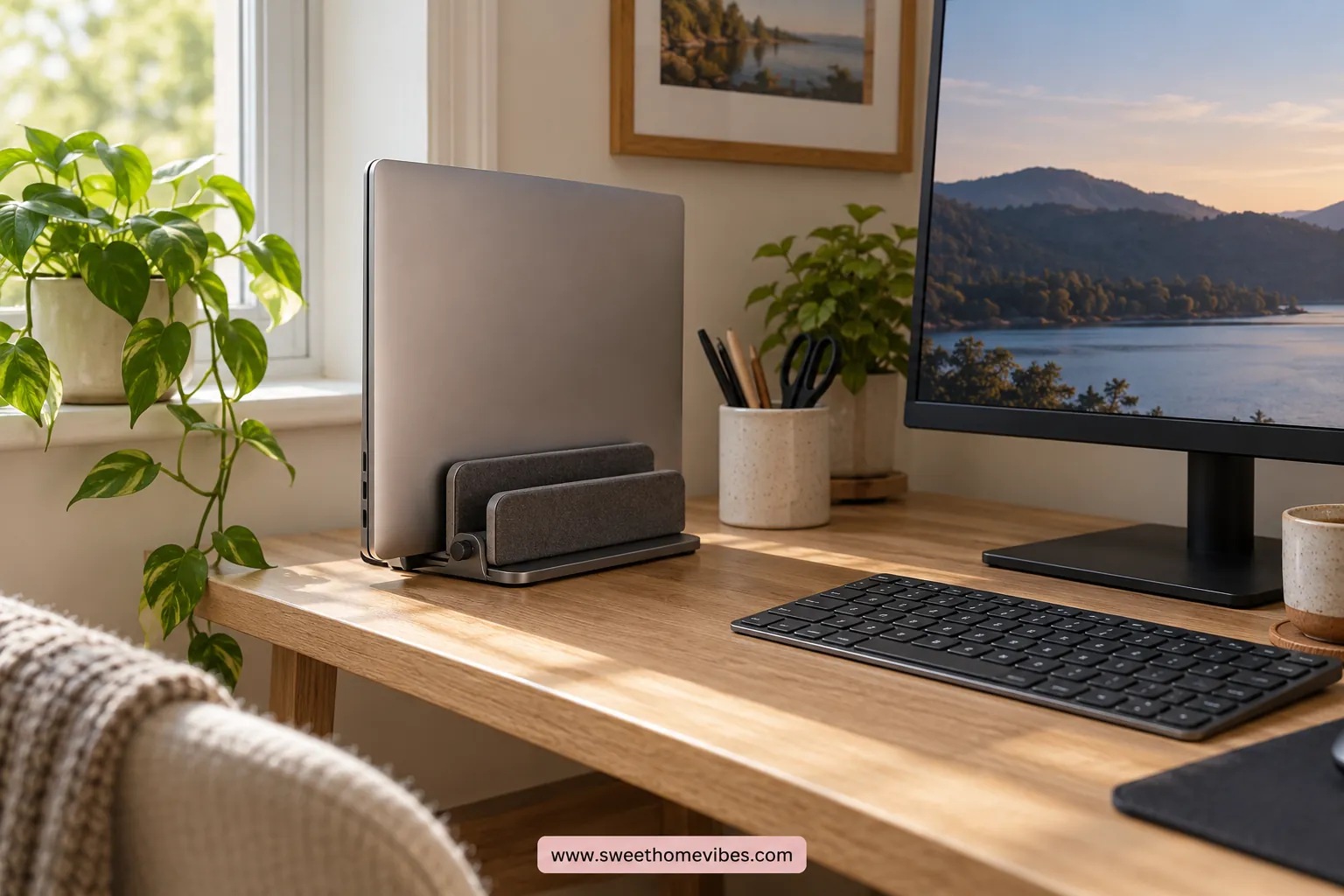
A closed laptop can occupy a large section of a narrow desk, particularly when you use an external monitor. A vertical laptop stand holds the device upright instead of leaving it flat beside your keyboard. This creates additional working space without requiring a larger desktop.
Choose a stable stand that supports your laptop's thickness and protects its edges from scratches. Check the manufacturer's ventilation guidance before storing a powered-on laptop vertically or operating it with the lid closed. If connected cables interfere with placement, our guide to hiding desk cables without drilling covers suitable organization methods.
Amazon Product Recommendation
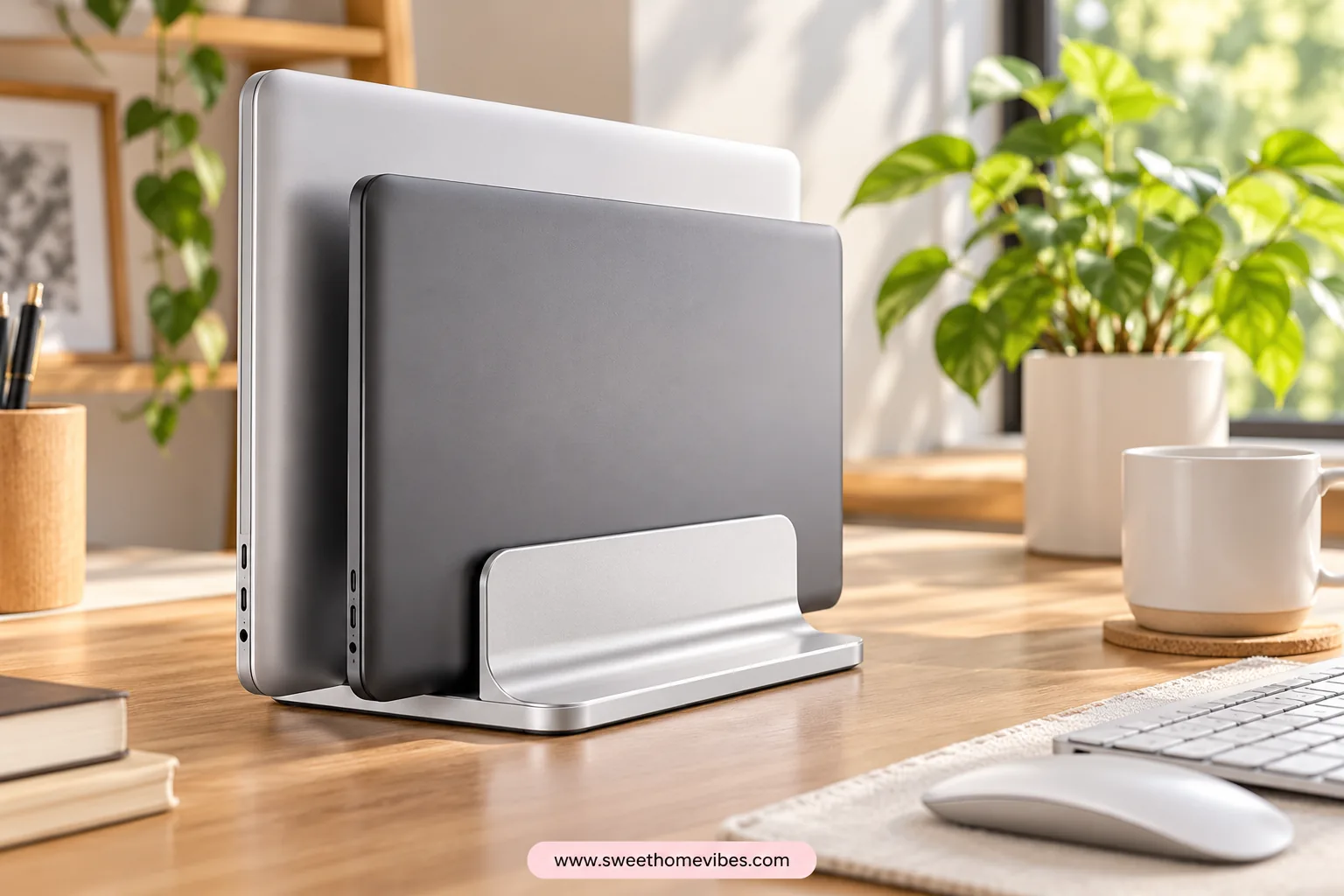
Adjustable Dual Vertical Laptop Stand
1K+ bought in past monthSee the details
Product specs
- Silver anodized aluminum stand with two device slots.
- Adjusts for laptop thicknesses from 0.55 to 1.65 inches.
- Silicone-lined slots and non-slip base pads.
Best for
Storing one or two closed laptops upright to clear desktop space.
Follow your laptop manufacturer’s ventilation guidance before using it while closed.
Buy now on Amazon11. Create a Pull-Out Supply Station for Shared or Multipurpose Desks
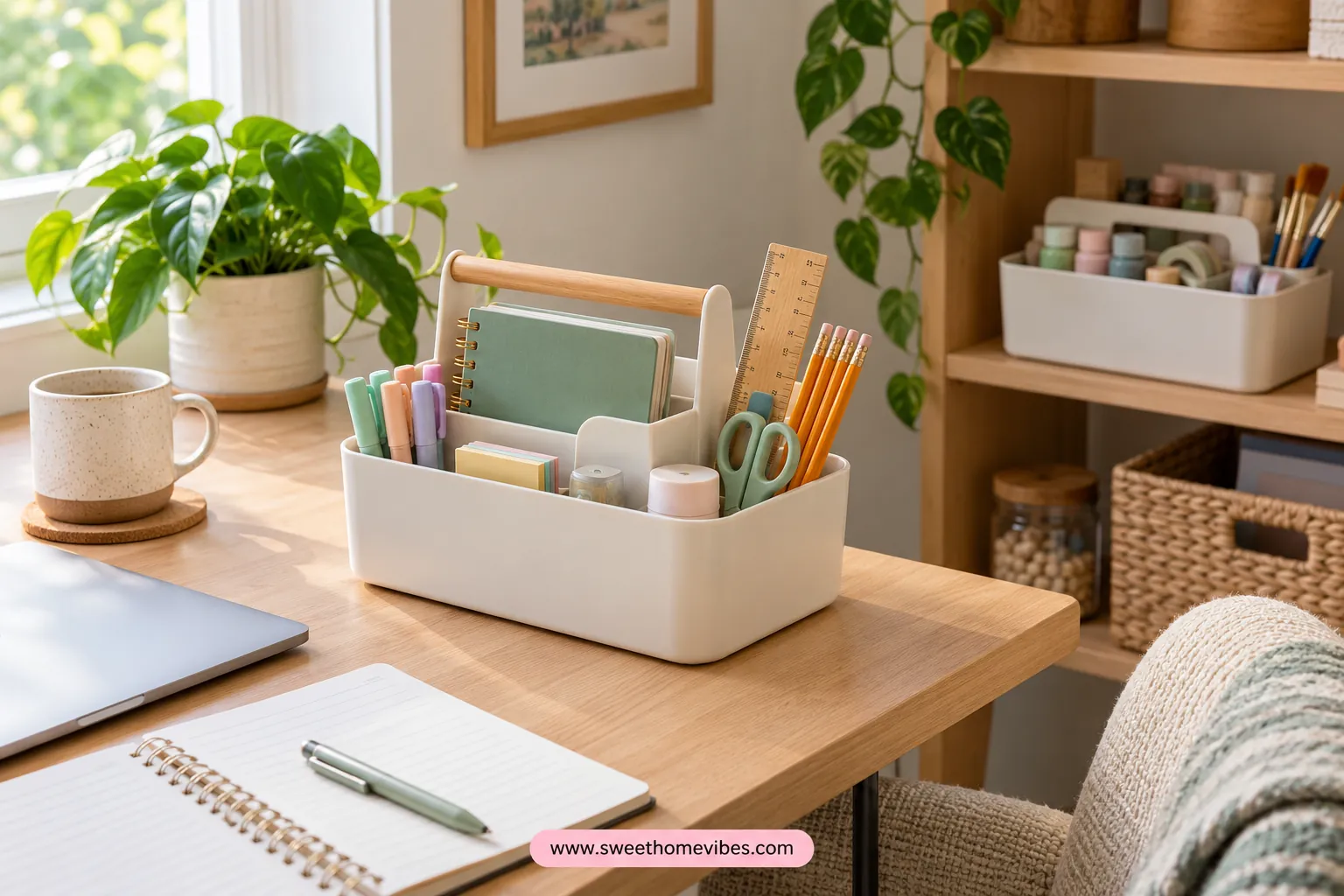
A small desk may serve as a study area, work surface, or hobby table at different times. Permanent organizers can become inconvenient when each activity requires different supplies. A portable bin, handled caddy, or shallow tray keeps related items together so you can switch tasks more easily.
Create separate kits for activities such as studying, office work, or crafting, then store them on a nearby shelf. Choose containers that hold the necessary supplies without becoming difficult to carry or store. This approach is particularly useful when several household members share the same desk.
Optional Amazon Product Recommendation
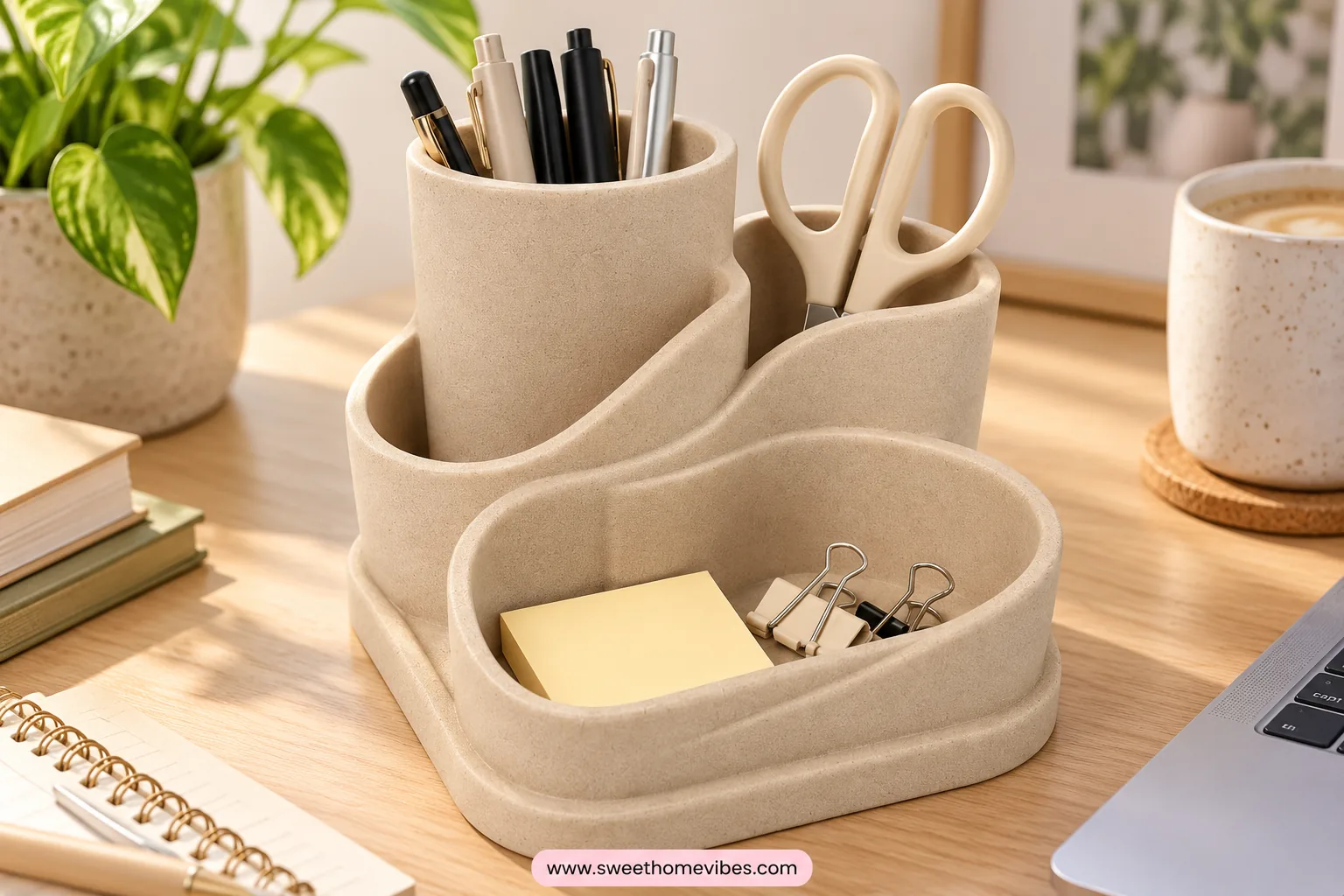
Beige Resin Desk Caddy
100+ bought in past monthSee the details
Product specs
- Stone-look beige resin organizer with several open compartments.
- Approximately 7 × 6 × 4.5 inches.
- Solid base with sections for pens, scissors, sticky notes, and clips.
Best for
Keeping a small set of stationery together for a shared work surface.
This caddy has no carrying handle; choose a handled container if you move heavy supply kits often.
Buy now on AmazonHow to Organize a Small Desk Without Drawers
A desk without built-in drawers can still provide enough storage when you use the surrounding space thoughtfully. Instead of buying several organizers immediately, start with the items causing the most clutter. These four steps will help you create a storage system suited to your desk.
Step 1 — Sort Everything by How Often You Use It
Separate daily essentials from weekly supplies and rarely used belongings. Keep frequently used items within comfortable reach, while moving occasional supplies away from the main surface. This prevents unnecessary accessories from occupying space needed for everyday tasks.
Step 2 — Measure the Space You Can Actually Use
Check the underside clearance, desk-edge thickness, available wall space, and nearby floor area. Remember to account for chair movement, legroom, and access to electrical equipment. These measurements will help you identify which storage options can fit safely.
Step 3 — Choose One Storage Solution for Your Biggest Problem
Identify the category responsible for most of your clutter before selecting an organizer. Paper piles may need a vertical holder, while loose stationery might fit inside a shallow drawer. Start with one solution rather than purchasing several accessories at once.
Step 4 — Test the Setup During a Normal Workday
Use your reorganized desk for a day or two before making additional changes. Notice whether supplies remain easy to reach and whether new storage interferes with movement. Adjust anything that makes retrieving your belongings more difficult than before.
Which Small Desk Storage Idea Is Right for Your Setup?
The right storage option depends on what occupies your desk and which surrounding areas are available. Wall organizers suit some narrow workspaces, while rolling carts require enough floor clearance. Compare these desk organization ideas for small spaces before choosing a solution.
| Desk problem | Recommended solution | What to check |
|---|---|---|
| No built-in drawers | Under-desk drawer | Legroom and attachment |
| Paper piles | Vertical file holder | Paper size and capacity |
| Limited desktop space | Desk-edge basket | Clamp compatibility |
| Unused wall space | Wall organizer | Mounting restrictions |
| Tiny loose accessories | Stackable compartments | Easy access |
| Bulky supplies | Slim rolling cart | Floor clearance |
| Laptop occupies the surface | Vertical laptop stand | Device compatibility |
| Multipurpose desk | Portable supply kit | Nearby storage location |
Consider how often you'll need each item before deciding where to store it. Daily essentials should remain more accessible than archived documents or backup accessories. A useful organizer saves space without making routine tasks unnecessarily difficult.
What Should You Avoid When Organizing a Small Desk?
Adding more storage products doesn't automatically create more usable working space. Oversized containers, poorly positioned shelves, and unnecessary accessories can make a compact desk feel even smaller. Avoid these mistakes before purchasing anything.
- Buying before measuring: Check dimensions and attachment requirements first.
- Filling every empty surface: Preserve room for your keyboard, mouse, and paperwork.
- Overloading shelves: Follow installation instructions and weight limits.
- Blocking legroom: Keep under-desk storage away from knees and chair movement.
- Ignoring electrical access: Avoid covering outlets, adapters, or ventilation openings.
- Keeping everything nearby: Move rarely used supplies outside your immediate working area.
If you're planning several storage purchases alongside a wider room refresh, decide how much you can comfortably spend. Our Room Makeover Budget Planner can help you organize a broader improvement budget. It's designed for room-level planning rather than calculating individual desk-organizer prices.
Frequently Asked Questions About Small Desk Organization
What are the best small desk organization ideas when you have no drawers?
Under-desk drawers, clamp-on baskets, and vertical file holders can provide storage without built-in compartments. Choose a drawer for small stationery, a side basket for accessible accessories, or a file holder for paperwork. Check available clearance and attachment requirements before buying.
How can I add storage to a desk without drilling?
Clamp-on baskets, freestanding organizers, and portable supply kits can add storage without drilling into furniture. Adhesive drawers may also be suitable when the desk material and manufacturer's weight rating allow them. Check compatibility and removal instructions before installing adhesive accessories.
How do you organize a small desk with lots of paperwork?
Separate paperwork into documents requiring action, current working materials, and completed records. Store active papers upright in a narrow file holder so individual documents remain easy to retrieve. Move archived paperwork into longer-term storage instead of keeping everything on your desk.
Are desk organizers worth buying for a very small desk?
A compact organizer can be useful when it stores necessary supplies while occupying less space than those items previously required. However, oversized containers may make a narrow desk feel more crowded. Remove unnecessary belongings first, then choose storage according to what remains.
How can I keep a shared desk organized?
Give each person or activity a separate portable supply kit. Store the kits on a nearby shelf or in another designated location between uses. This keeps belongings from getting mixed together while leaving the desk available for different tasks.
Make Your Small Desk Easier to Use, Not Just Neater
A small desk doesn't need to hold every notebook, accessory, and supply you own. Thoughtful storage keeps daily essentials accessible while moving occasional items away from your main working surface. Start with the category causing the most clutter, then add another solution only when necessary.
Once your storage feels manageable, you can consider improving the wider workspace. Our home office makeover on a budget guide covers lighting, comfort, and other affordable upgrades. These changes can make your existing desk more comfortable and easier to use.