
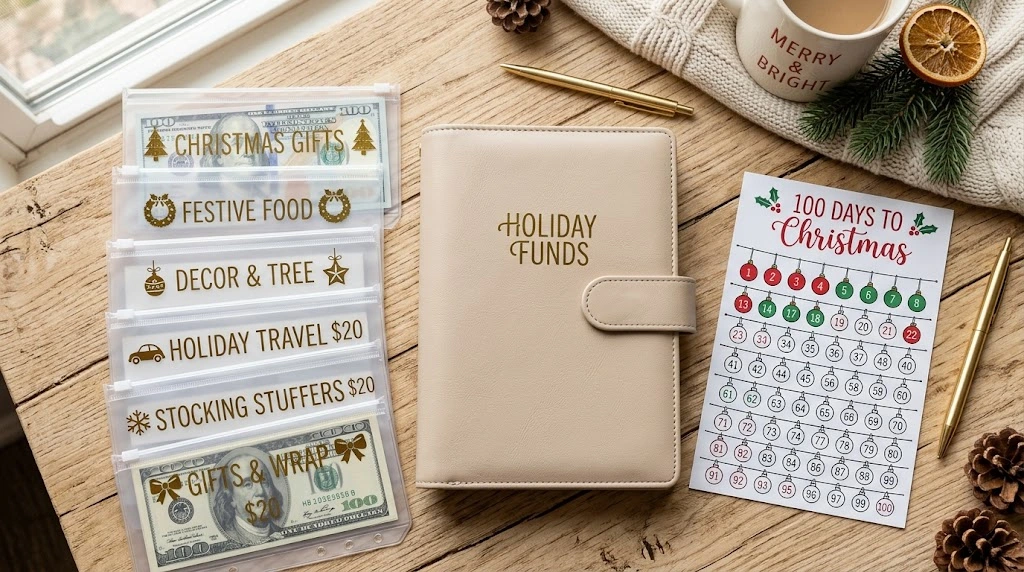
Christmas can give kids and teens a fun reason to learn about saving money. A 100 days Christmas savings challenge for kids turns small amounts into a personal Christmas fund. There is no required $100, $500, or $1,000 target. Kids can save whatever amount suits their allowance, age, and available money.
A child might save for a special Christmas gift or festive bedroom decoration. A teen might want new headphones, books, gaming accessories, clothes, or money for a Christmas outing.
The purpose is to save regularly for 100 days and watch the total grow. Even $1 on some days can count toward the final Christmas fund.
What Is a 100 Days Christmas Savings Challenge for Kids?
A 100 day savings challenge for kids asks children or teens to save small amounts during 100 days. Each deposit counts toward something they want for Christmas.
Kids do not need the same deposit every day. One day might add $1, another $3, and another nothing.
The challenge can work with allowance money, small cash gifts, or money from age appropriate tasks. Teens with part time income can also add small amounts from their earnings.
A kids Christmas savings tracker can make each deposit visible. Marking another day can turn saving into an activity rather than another money rule.
Pick a Personal Christmas Savings Goal
A personal target gives the challenge a purpose. Ask the child what they want their Christmas fund to pay for.
Possible goals include a special gift, Christmas decor, craft materials, books, or gaming accessories. Kids can also save toward a festive activity they want to enjoy. A younger child might aim for $50 during the challenge. Another child might reach $100, and a teen might save a different amount.
The final total matters less than building the habit. Reaching day 100 with personal savings gives the child something tangible to celebrate. It also gives parents a chance to teach kids how savings goals can help them prepare for future expenses. Learn how to set up sinking funds for kids’ expenses to build on that lesson beyond the Christmas challenge.
Save Different Amounts During the 100 Days
A 100 day Christmas money challenge for kids does not require one fixed deposit. Flexible amounts make the challenge suitable for different ages and allowances.
Kids might add $1 after receiving allowance. They might add $5 after completing an agreed paid task.
Some days can have no deposit. The child can return to the tracker when money becomes available again.
This structure removes the idea that missing one deposit ruins the challenge. The goal is regular participation throughout the 100 day period.
Try a $100 Christmas Savings Goal
A $100 target can provide an easy example for kids who want a number to follow. Saving $1 on 100 challenge days reaches $100.
Children do not have to follow that exact pattern. They might save 50 cents one day and $2 another day.
Teens can set a higher target when their allowance or income permits it. Each child can match the challenge to their own situation.
Make the Goal Visible
Write the Christmas wish at the top of the tracker. Add the target amount beside it when the child wants a specific total.
A child saving for Christmas decor might write, “My Christmas corner fund.” A teen saving for headphones can write the product name instead.
The visible goal connects every deposit to something meaningful. It can also discourage spending the fund on unrelated purchases.
Fun Christmas Savings Ideas for Kids and Teens
A savings challenge can become much easier to follow when kids have several ways to add money. The deposits do not need to come from one source.
Parents can help younger children identify age appropriate opportunities. Teens can manage their own challenge with allowance or personal earnings.
Save Part of an Allowance
Kids who receive an allowance can place part of it into their Christmas fund. They can decide the amount before spending the rest.
A child with a $5 allowance might save $1. Another child may put aside $2 when they have fewer expenses that week.
Add Birthday or Gift Money
Some children receive small cash gifts before Christmas. They can put part of that money toward their Christmas savings challenge for children.
The child does not have to save every dollar. Splitting money between spending and Christmas savings can teach basic money planning.
Earn Money From Age Appropriate Tasks
Families can create optional paid tasks outside normal household responsibilities. The child can put some earnings into the Christmas fund.
The exact task should match the child’s age and family rules. Parents can decide which activities qualify for payment.
Use a Spare Change Jar
Coins can build a Christmas fund without requiring a fixed deposit. Kids can place spare change into a jar beside their tracker.
Count the money at selected points during the challenge. Recording the new total can add another enjoyable milestone.
Try No Spend Days
Older kids and teens can identify small purchases they sometimes skip. The unused money can move into their Christmas fund instead.
A teen might skip one optional snack and save that money. The challenge should encourage thoughtful spending rather than removing every small treat.
What Can Kids Save Their Christmas Money For?
The 100 days Christmas savings challenge for teens and kids works best when the money has a personal purpose. The goal does not have to involve buying gifts for other people.
A Special Christmas Gift
Kids can save toward something they genuinely want. Books, toys, art supplies, headphones, games, and hobby items can become possible targets. Parents can help younger children check the approximate price. The child can use that number as a savings target.
Christmas Bedroom Decor
Some kids may prefer decorations instead of another gift. Their fund might pay for string lights, ornaments, bedding, or small festive decorations. Letting them save toward their own decor can make the challenge personal. They also get to plan where their savings go.
A Christmas Activity
The money can pay toward a festive experience instead of an item. Possible ideas include baking supplies, a movie trip, crafts, or another family approved activity. This option can suit children who already have the items they want.
Gifts for Family or Friends
Older kids may want to buy small presents with their own money. A Christmas savings fund can help them plan those purchases before December.
They can create separate amounts for parents, siblings, or friends. A small spending target can prevent the fund from disappearing on one purchase.
A Personal Christmas Treat
Not every savings target must be expensive. A child might save $20 or $30 for one personal Christmas treat. A smaller target can suit younger kids particularly well. Reaching it can make the full 100 day challenge rewarding.
Create a Christmas Savings Binder for Kids
A Christmas savings binder for kids can hold cash, trackers, wish lists, and category cards. Kids can see their progress each time they add money. Use an A6 binder, transparent zipper pouches, and tracker cards. Give each pouch a purpose based on the child’s Christmas goals. Possible labels include “My Gift,” “Christmas Decor,” “Family Gifts,” and “Christmas Activity.” Teens can create labels that match their own targets.
Let the child decorate the tracker or binder if they want. Stickers, Christmas icons, or handwritten labels can make it personal. Parents should store larger cash totals securely. Younger children may also need help recording deposits and counting their total.
The Under $25 Amazon Christmas Savings Binder Setup
A small binder can turn the challenge into something kids can physically use. Three basic supplies can create a reusable Christmas cash envelope challenge for kids.
The same binder can serve another savings challenge after Christmas. Replace the tracker and pouch labels when the goal changes.
Sooez A6 PU Leather 6 Ring Budget Binder
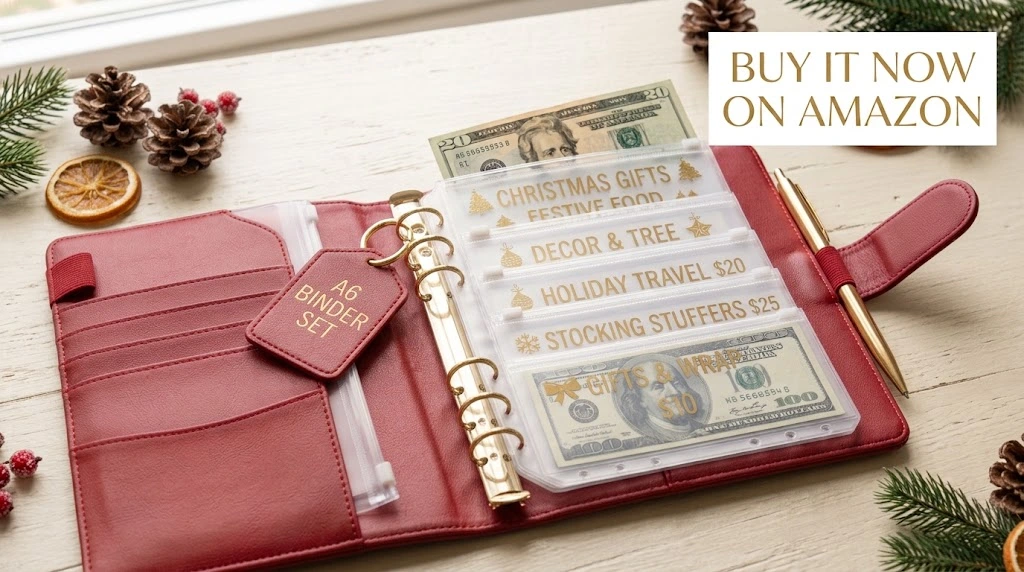
The Sooez A6 budget binder provides a compact base for the challenge. Its six ring design accepts compatible A6 pages and inserts.
Kids can use it for savings trackers, wish lists, and Christmas planning pages. Teens may also like the compact format for personal savings goals.
The binder measures 7.48 × 5.2 inches. The listing includes the binder itself, so zipper pouches and trackers require separate purchases.
Antner 12 Pack A6 Clear Zipper Binder Pockets
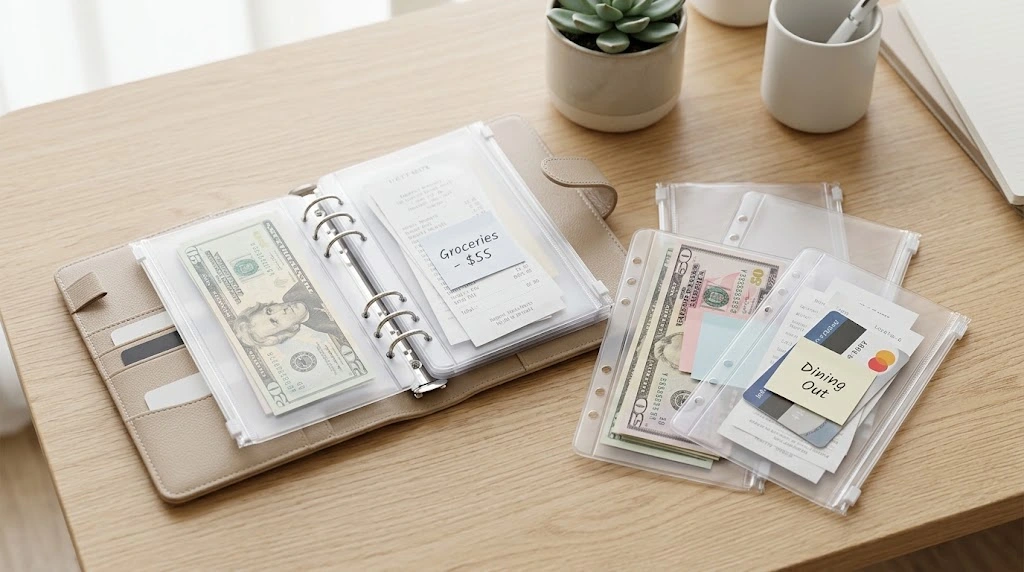
These clear A6 zipper pockets can separate money for different Christmas goals. Kids can see the cash inside each pouch.
One pouch might hold gift savings. Another might hold Christmas decoration money or funds for a festive activity.
The pack contains 12 PVC pockets for compatible six ring A6 binders. Zipper closures help secure coins, notes, receipts, and cash.
A6 Budget Expense Tracker Inserts
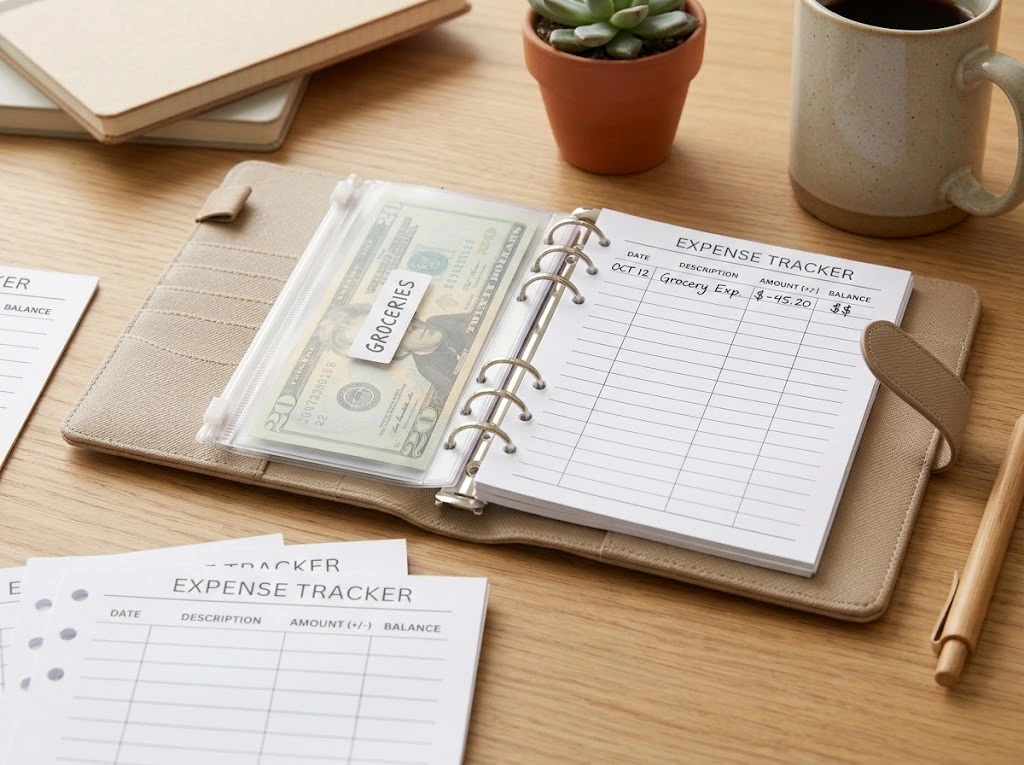
A6 tracker inserts give kids a place to record each deposit. Write the date, deposit amount, and current savings total.
Younger children may complete the tracker with a parent. Teens can record deposits themselves and compare their total with their Christmas target.
These inserts fit compatible six ring A6 binders. They can also serve another savings goal after the Christmas challenge ends.
Printable and Digital Christmas Savings Trackers for Kids
A printable Christmas savings challenge for kids can work without a binder. Kids can mark 100 spaces as they move through the challenge.
Each space can represent one challenge day rather than a fixed dollar amount. Write the deposit beside the day and add it to the total.
Printable 100 Day Tracker
Create a sheet with 100 numbered spaces. Kids can color, tick, or decorate one space whenever they complete another challenge day.
Add a section for the Christmas goal and current total. This gives the child two things to follow during the challenge.
A tracker can also include mini milestones at days 25, 50, 75, and 100. These checkpoints can make a 100 day challenge feel manageable.
Christmas Cash Envelopes
Cash envelopes work well for kids who like seeing physical progress. Each pouch can represent a different Christmas savings purpose.
Younger children can count the cash with a parent. Teens can record their balance after each deposit.
Digital Savings for Teens
Older teens may prefer a digital method when they already use a suitable supervised account. They can record each deposit on a digital tracker.
Parents should select any account or money app based on age requirements. The challenge itself does not require a particular financial product.
Ways Parents Can Make the Challenge Fun
A kids savings challenge should focus on participation rather than competition. One child may save $40 during 100 days, and another may save $150.
Both can complete the challenge successfully. Their available money and Christmas goals may differ.
Let Kids Pick Their Own Goal
Give children some freedom to select what they save toward. A personally meaningful target can make the challenge easier to follow.
Parents can discuss price and suitability before the challenge begins. The child can write the agreed goal on the tracker.
Celebrate Savings Milestones
Day 25, day 50, and day 75 can become mini milestones. Celebrate the progress rather than the dollar amount.
A sticker, Christmas movie night, or tracker badge can mark the milestone. The reward does not need to cost money.
Avoid Comparing Siblings
Different ages usually mean different allowances and opportunities to earn money. Comparing totals can turn the challenge into an unwanted contest.
Instead, let each child follow an individual target. The 100 day period gives everyone the same challenge length.
Let Kids Count Their Progress
Counting saved money can make the challenge educational. Younger children can practise basic addition through their deposits.
Older kids can calculate the difference between their current total and target. This connects Christmas excitement with useful money skills.
FAQs About the 100 Days Christmas Savings Challenge for Kids
What is a 100 days Christmas savings challenge for kids?
It is a 100 day activity where kids save small amounts toward a personal Christmas goal. There is no required final total. Each child can save according to their allowance, age, available money, and chosen Christmas wish.
Does my child need to save $1 every day?
No. Kids can save different amounts throughout the challenge. A child might add $1 today, $3 another day, and skip another date. The purpose is to build savings during the 100 day period.
Can a child save $100 during the Christmas challenge?
Yes. Saving an average of $1 for each challenge day can reach $100. Kids can also use different deposit amounts. A smaller final total counts if it matches the child’s available money and personal goal.
What can kids save for during the Christmas challenge?
Kids can save for a Christmas gift, bedroom decor, books, crafts, gaming accessories, or a festive activity. Older children can also save money for small presents they want to buy for family members or friends.
Is the Christmas savings challenge suitable for teenagers?
Yes. A Christmas savings challenge for teens can use allowance, gift money, or age appropriate earnings. Teens can select their own Christmas target and track deposits through cash envelopes, a paper tracker, or a suitable digital method.
What happens if my child misses several savings days?
Missing days does not end the challenge. The child can continue when money becomes available. A flexible format prevents one missed deposit from ruining the experience and lets kids focus on their total progress.
Do kids need a savings binder for the challenge?
No. A binder can make physical cash easier to organize, but it is optional. Kids can use a jar, envelope, printable tracker, or suitable digital method. The best format is one they can follow consistently.